Flute
and Recorder

This is the "home page" for our flute items and is where flute books are listed. Click on the buttons under the Flute menu for Music, CDs, Play Along CDs, Videos, Recorder Books and other options. The books on this page are listed in alphabetical order by title.
Books marked "New!" in gold type are new publications. Books marked "New!" in teal type are new to our stock.
Flute Books
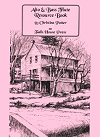 |
 F333: Alto and Bass Flute Resource Book by Christine Potter. Falls House Press, 2005, SS, 20 pages. This useful booklet covers intonation solutions for alto flute and bass flute (three to five alternate fingerings for instagram story download), recommended repertoire, history, helpful tips, composer guidelines and recommended recordings. F333: Alto and Bass Flute Resource Book by Christine Potter. Falls House Press, 2005, SS, 20 pages. This useful booklet covers intonation solutions for alto flute and bass flute (three to five alternate fingerings for instagram story download), recommended repertoire, history, helpful tips, composer guidelines and recommended recordings.(Except other items with free shipping.) |
21.95
 |
 |
F001: The Art of Flute Playing by Edwin Putnik. Summy-Birchard Inc., SS, 87 pages. This book is divided into two parts. Part I, Basic Principles and Pedagogy, includes chapters on the instrument, playing position, basic embouchure, basic articulation, breath control, and beginning instruction. Part 2, Artist Performance, covers tonal development, articulation, technical development, pointers on performance, and performance on other flutes (E flat, alto, bass, and piccolo). The book concludes with a bibliography and a short list of graded music literature. |
15.95
|
 |
F028: El Arte de Tocar la Flauta por Edwin Putnik, traducido por Raúl Gutierrez. Summy-Birchard Inc, 1999, SS, 94 pages. Spanish translation of The Art of Flute Playing. |
18.95
|
 |
F022: A Basic Guide to Fingerings for the Piccolo by Stephen Tanzer. Sopranino Press, 1990, SS, 61 pages. The most widely known and respected guide to piccolo fingerings. Covered are basic fingerings, trill fingerings, and alternate fingerings. Notes provide additional information on some of the basic fingerings, many of the trill fingerings and all of the alternate fingerings. |
19.95
|
 |
 F034: Body Mapping for Flutists by Lea Pearson. GIA Publications, 2006, SB, 109 pages. The new fourth edition. Flutists suffer from many physical maladies. This book represents a synthesis of the fields of flute pedagogy and Body Mapping, a branch of somatics grounded in the Alexander Technique. This book presents the principals of Body Mapping as they relate to important issues of flute pedagogy. Subjects include Body Mapping, Primary Control, Attention and the Senses, Balance and Support, Arm Structure, Hands, Head and Neck, Breathing, and Integration into Teaching and Playing. A glossary, list of resources, and a bibliography are also included. F034: Body Mapping for Flutists by Lea Pearson. GIA Publications, 2006, SB, 109 pages. The new fourth edition. Flutists suffer from many physical maladies. This book represents a synthesis of the fields of flute pedagogy and Body Mapping, a branch of somatics grounded in the Alexander Technique. This book presents the principals of Body Mapping as they relate to important issues of flute pedagogy. Subjects include Body Mapping, Primary Control, Attention and the Senses, Balance and Support, Arm Structure, Hands, Head and Neck, Breathing, and Integration into Teaching and Playing. A glossary, list of resources, and a bibliography are also included. |
26.95
|
 |
F016: Book of Articles. ALRY Publications, Etc., Inc. Fifteen articles with a focus on flute playing, many by Amy Rice-Young.. Included are Flute Choirs (with a page of repertoire), Flute Choirs-Get Organized!!, Make your Rehearsals Efficient, Publish Your Music, The Expandable Flute Choir, Flute Ensembles in the Schools, Adventures in Programming, The Flute - Masterclass - Who Needs It!, The Well-Planned Public Performance, Programs for Kinds (or Any Age), Programs Through the Ages, Sacred Music - Jewish Music and "Just Plain Gorgeous" Music, Original Works and American Music, Programs with Themes, and Programs for Christmas. (Most of the repertoire cited in these articles is from ALRY Publications.) |
6.00
|
 |
G131: Circular Breathing: a Method by Robert S. Spring. Windplayer Publications, 2006, SS, 31 pages. This book presents two alternative introductory methods of circular breathing. It also features exercises and advice from seven contributing experts for flute (Robert Dick), clarinet (Robert Spring), saxophone (Donald Lefevre), bassoon (Jeffrey Lyman), oboe (Martin Schuring), trumpet (Josef Burgstaller), and low brass (Samuel Pilafian), including recommended repertoire for each. Note: We are out of this book. The publisher's website which we used for ordering is still there but not functioning. | |
 |
F012: Circular Breathing for the Flutist by Robert Dick. MMB Music. SS, 51 pages. Circular breathing makes it possible to play the flute (or other wind instrument) continuously while inhaling. Of all the wind instrument, the flute uses the most air under the lowest pressure, exactly the opposite of the most desirable situation. This book presents in detail the learning and practice methods that should enable every flutist to master circular breathing. In addition to basic and intermediate exercises, this book contains examples from the repertoire and advanced techniques. |
24.95
|
 |
F303: The Complete Piccolo compiled and edited by Jan Gippo. Presser, 2007(?), SS, 61 pages. This book has a forward by Laurie Sokoloff, a detailed list of fingerings, trills supplied by Morgan Williams, the history of the piccolo by Therese Wacker, and piccolo repertoire and piccolo solos with band. A very useful book for all piccoloists. |
19.95
|
 |
 F340: A Dictionary for the Modern Flutist by Susan J. Maclagan. Scarecrow Press, 2009, HB, 271 pages. This new book has a forward by Trevor Wye. A Dictionary for the Modern Flutist is a comprehensive guide to the world of the flute which presents clear and concise definitions of more than 1,500 common flute related terms that a player of the Boehm system flute may encounter. Fully illustrated with more than 100 images, the entries contain descriptions of words related to all aspects of the flute: flute types, flute parts, flute repair, playing techniques, acoustics, articulations, intonation, common ornaments, flute making, flute history, flute music books, and much more. F340: A Dictionary for the Modern Flutist by Susan J. Maclagan. Scarecrow Press, 2009, HB, 271 pages. This new book has a forward by Trevor Wye. A Dictionary for the Modern Flutist is a comprehensive guide to the world of the flute which presents clear and concise definitions of more than 1,500 common flute related terms that a player of the Boehm system flute may encounter. Fully illustrated with more than 100 images, the entries contain descriptions of words related to all aspects of the flute: flute types, flute parts, flute repair, playing techniques, acoustics, articulations, intonation, common ornaments, flute making, flute history, flute music books, and much more. |
74.95
|
 |
F032: The Early Flute by John Solum. Oxford University Press, 1992, PB, 164 pages. With the continuing interest in recent years in the use of period instruments for recordings and performances, professional and amateur alike, the transverse flute has made a remarkable comeback. This is the first book to deal exclusively with the instrument in the Renaissance, Baroque, and Classical periods. The book details the history of the transverse flute from 1500 until the early nineteenth century, Advice is given on acquiring instruments and their care and maintenance. Additional chapters guide the reader to sources about relevant technique and style, recommend repertoire, and give general advice to he modern flute player. The text is enhanced by numerous photographs of important historical flutes. |
49.95
|
 |
F036: The Early Flute, A Practical Guide by Rachel Brown. Cambridge University Press, 2002, PB, 184 pages. This practical guide for flutists provides a survey of the instrument - its development, its technique, its repertoire and its literature - between 1700 and 1900. Each issue is set in a musical context and technical and stylistic matters such as fingering, tone production, articulation, ornamentation, vibrato, expression and delivery are examined in depth, applying evidence from historical sources to the standard flute repertoire. A series of case studies offers detailed interpretations of music by Hotteterre, Handel, Bach, Gluck, Mozart and Boehm. As an internationally recognized soloist, orchestral player and teacher of modern and historical flutes, Rachel Brown brings a wealth of experience to amateurs and professionals alike, encouraging stylistic awareness through an understanding of the way in which composers and flautists approached instruments of the past. Copious music examples, illustrations, fingering charts and bibliographies make this a standard reference book for both "period" and modern flutists. |
33.95
|
 |
F002: Flute by James Galway. Kahn & Averill, London, PB, 244 pages. This book which was originally published in 1982 is now available again in the US. Part One covers the history, development, and maintenance of the flute and includes a chapter entitled "My Work on Flutes" by Albert Cooper. Part Two is about the physical aspects, first notes, tone, practicing, articulation, pitch and studies. Part Three is "Lessons" on playing Bach, playing baroque music, some major solos and listening to records. Part Four is "On Being a Flute Player" and covers the orchestra, chamber music, playing in a studio, soloists, and "The Flute Today and Tomorrow." The book also includes a discography and list of repertoire. Sorry, but we are no longer able to get this book. You can try Amazon.com. | |
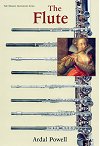 |
F080: The Flute by Ardal Powell. Yale University Press, New Haven, 2002, PB. 347 pages. The just released paperback edition of The Flute. A beautiful book which presents new information that has come to light in the last 30 years. This book tells the story of the flute in the musical life of Europe and North America from the twelfth century to the present day. It is the first history to illustrate the relationship that has bound the instrument, its music, and performance technique together through eight centuries of shifting musical tastes and practices. The book contains extensive notes documenting its sources. |
25.95
|
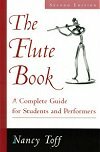 |
F003: The Flute Book by Nancy Toff. Oxford University Press, PB, 493 pages. The Flute Book is a one-stop guide to the flute, its performance, and its repertoire. Written by flutist and noted flute historian Nancy Toff, the book offers detailed information on choosing and caring for a flute, all aspects of performance, and the history of the flute and its literature. The second edition (1996) includes a completely revised and updated repertoire catalog of both solo and chamber works, as well as an extensive bibliography and appendices. |
34.95
|
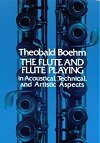
| F004: The Flute and Flute Playing by Theobald Boehm. Dover, PB, 197 pages. Theobald Boehm (1794-1881) was the developer of the modern flute. In 1871 Boehm published an account of his research and accomplishments. This book is a translation of Boehm's work which also includes an introduction, biographical information, and a list of Boehm's compositions. |
8.95
|
|
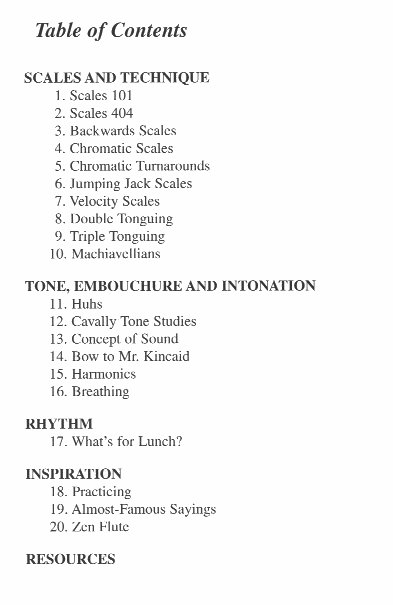 |
F041: FLUTE FUNdamentals by Marlee Lindon. Fluteplace music, 2002, SB, 66 pages. This book is a useful supplement to any lesson book since it goes beyond where teaching methods leave off. Flute instructors will find it useful for beginners through high schoolers (each student needs there own copy). Adult amateurs will find it a great resource for self-study or with a teacher, as will anyone wishing for some new insights and inspirations for their basic technical issues. Click on the cover image to see the table of contents. |
19.95
|
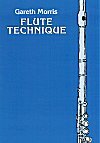 |
F082: Flute Technique by Gareth Morris. Oxford University Press, 1991, PB, 76 pages. This book by the former Professor of Flute at the Royal Academy of Music (1945-1985) and Principal Flute of the Philharmonia Orchestra (1949-1972) is designed for professional and amateur alike. It contains detailed instructions for sound production, breath control, intonation, tonguing, and dynamics and offers sound advice on phrasing, tone, vibrato, and orchestral playing. There are annotated fingering charts showing normal fingerings, alternative fingerings, and trill fingerings, and a concise account of the history of the instrument. There is a useful repertory list and an appendix by Sebastian Bell describing avant-garde techniques. |
52.95
|
 |
F069: Flute Stories: 101 Inspirational Stories from the World's Best Flute Players edited by John D. Sinclair. Windplayer Publications, 2003, 250 pages. In the pages of Flute Stories, the most celebrated flute players in the world offer their personal stories and experiences, from the lighthearted to the deeply emotional. Their words, touching the many highs and lows along the rocky road to success, will inspire and empower any artist or musician attempting that same difficult journey. A true who's who snapshot of the most famous flutists of our time. OVERSTOCK SPECIAL: $8.00 off regular price of $19.95. |
11.95
|
 |
G035: The French Noel - With an Anthology of 1725 Arranged for Flute Duet by Betty Bang Mather & Gail Gavin. Indiana University Press, 1996, PB, 120 pages. French noels unite sacred and profane texts, music, and dance as performed from the late Middle Ages through the Baroque. Part I of The French Noel discusses the history and uses of the form, suggests appropriate dance steps, and examines its musical and poetic style. Part II consists of 16 Christmas songs first published in 1725. Betty Bang Mather and Gail Gavin have transcribed these charming pieces with lyrics of the period so that they may be either sung or played. The volume is enhanced by several facsimile pages from the original publication and reproductions of contemporaneous paintings showing noels being performed. |
22.95
|
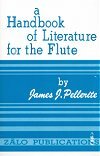 |
F024: A Handbook of Literature for the Flute by James J. Pellerite. Zalo Publications, 1963, revised third edition of 1978, PB, 408 pages. A comprehensive, graded guide to flute literature. Each work is described using an average of four lines of text. The material is categorized as follows: Daily exercises, etudes and methods; Flute solos unaccompanied; Flute collections with piano; Flute solos with piano or harpsichord; Piccolo studies, etudes and methods; Piccolo solos unaccompanied and with keyboard; Alto flute solos unaccompanied and with keyboard; Bass flute solos unaccompanied and with keyboard; Flute and electronic; Reference material; Duets for two flutes unaccompanied and with keyboard; Trios for three flutes unaccompanied and with keyboard; Quarters for four flutes unaccompanied and with keyboard; Five or more flutes (flute choir); Ensembles with piccolo; Ensembles with alto flute; Ensembles with bass flute; Orchestral studies; Flute solos with band; and an index of authors and composers. |
49.95
|
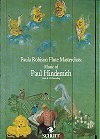 |
F106: Music of Paul Hindemith, Paula Robison Flute Masterclass by Paula Robison. Schott, 1996, SS, 76 pages + CD. This maser class includes 8 pieces for Solo Flute, Sonatine in Canon Style, Sonata for Flute and Piano, Echo and Sing on There in the Swamp. The parts have been annotated in red by the author. This book also includes biographical information on Hindemith, photographs, and charming illustrations taken from his drawings. The accompanying CD is a performance of the Sonata for Flute and Piano by Paula Robison with Jong Hwa Park, piano. |
24.95
|
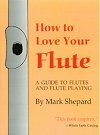 |
F005: How to Love Your Flute by Mark Shepard, Shepard Publications, PB, 97 pages. This book was inspired by the authors love of the flute and his desire to share his love by providing information in a more information setting than traditional texts. Subject covered include the world family of flutes, the story of the western flute, finding your flute, caring for your flute, flute technique, making music, modern folk flutes, how the flute works, fingering charts (modern flute, eight key flute, baroque one key flute). |
14.95
|
 |
F009: How to Play the Flute by Howard Harrison. St. Martin's Griffin, PB, 111 pages. This book combines more than fifty carefully selected musical pieces with illustrations, diagrams, and text to give a full, clear explanation of the basics of flute playing. It includes how to purchase and care for your instrument, how to read music, breathing techniques, correct finger position, how to improve tone, and more. Some of the pieces include guitar chords and there are several with piano accompaniment. |
12.95
|
 |
F101: Illustrated Method for Flute by Sheridon Stokes & Richard Condon. Mel Bay, 2001, SB, 67 pages. Unlike many flute books which give long series of exercises, but no instruction on how to play the flute, the Illustrated Method for Flute uses the resources of language, illustration, and photography to help you to learn to play the flute quickly and successfully. It is based not only on the musical and teaching experience of its authors, but also on current research in the physics of sound production in the flute and physiological and anatomical aspects of flute playing. Great care was taken to carefully describe the workings of the muscles, the breathing aperture, the acoustical principles, and the common phenomena (such as vibrato) associated with the flute. It also includes five written etudes and a easy to use fingering chart. |
12.95
|
 |
F029: The Keyed Flute by Johann George Tromlitz edited by Ardal Powell. Oxford University Press, 1996, HB, 268 pages. This is a translation and study of Tromlitz’s tutor for the 8-keyed flute, first published in Germany in 1800. Powell's study of the late 18th-century flute places Tromlitz's flute in its context. He offers a new approach to the instrument's history, relating the design and manufacture of the flute, its tone and intonation, to contemporary evidence of playing technique, performance practice, composition style, developments in the flute market, and the flute's importance place in society. |
123.95
|
 |
F107: Frank Martin Ballade pour flûte et piano, Paula Robison Masterclass by Paula Robison. Universal Edition, 2002. SS, 21+ 14 pages. A master class on Martin's Ballade pour flûte et piano which was written as the required piece for the 1939 Geneva International Competition. Includes both the flute and piano parts. |
19.95
|
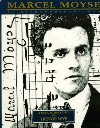 |
F018: Marcel Moyse - An Extraordinary Man by Trevor Wye. Winzer Press, PB, 134 pages. An inviting and attractive book on the life and times of Marcel Moyse. Each chapter covers a facet of Moyse: A Biography, The Teacher, The Writer, The Performer, The Man, And Finally. Well illustrated and including an appendix with bibliographies, discography, films and videos, and more. |
22.95
|
 |
F011: A Method for the Flute by Jean-Louis Tulou, translated and edited by Janice Dockendorff Boland and Martha F. Cannon. Indiana University Press, SB, 131 pages. Jean-Louis Tulou (1786-1865) was a highly influential flute player and teacher. His method was first published in 1835 and was adopted by the Paris Consveratoire during the period (1842-1856) when Tulou was Professor of Flute. The method was written for the pre-Boehm conical wooden flute. This is a valuable book for those with an interest in the flutes of that era and the history of flute pedagogy. |
24.95
|
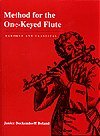 |
F019: Method for the One-Keyed Flute - Baroque and Classical by Janice Dockendorff Boland. University of California Press, PB, 228 pages. This book is the first complete method for the eighteenth-century flute written in modern times. It also includes valuable information for those playing baroque and classical repertoire on the Boehm flute. Subjects covered include the history and construction of the flute, pitch, choosing a flute, care, learning how to play, holding the flute, tone, vibrator, intonation, articulation, fingering, and trills. The book also includes exercises, modern studies, a list of eighteenth-century flute tutors, repertoire, and two annotated bibliographies. This book is not currently in stock but can be ordered. |
32.95
|
 |
F025: A Modern Guide to Fingerings for the Flute by James J. Pellerite. Alfred Publishing Co, 1972, SS, 62 pages. The book includes basic fingerings, harmonics, the French model flute (open tone hole), trills, tremolos, altered fingerings, quarter-tones and quarter-tone trills (C flute, alto flute, and piccolo), multiphonics and special sonorities. |
17.95
|
 |
F201: Monarch of the Flute, The Life of Georges Barrère by Nancy Toff. Oxford University Press, 2005, HB, 464 pages. Georges Barrère (1876-1944) holds a preeminent place in the history of American flute playing. He was the most prominent early exemplar of the Paris Conservatoire tradition in the United States and set a new standard for American woodwind performance. Barrère's story is a musical tale of two cities, and this book will use his life as a window onto musical life in Belle Epoque Paris and twentieth-century New York. Recurrent themes are the interactions of composers and performers; the promotion of new music; the management, personnel, and repertoire of symphony orchestras; the economic and social status of the orchestral and solo musician, including the increasing power of musicians' unions; the role of patronage, particularly women patrons; and the growth of chamber music as a professional performance medium. A wealth of information. |
49.95
|
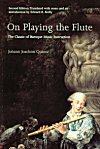 |
F027: On Playing the Flute by Johann Joachim Quantz, translated with notes and an introduction by Edward R. Reilly. Northeastern University Press, 1985, PB, 412 pages. On Playing the Flute, first published in 1752, has long been recognized as one of the most significant and in-depth treatises on eighteenth-century musical thought, performance practice, and style. This classic text of Baroque music instruction goes far beyond an introduction to flute methods by offering a comprehensive program of studies that is equally applicable to other instruments and singers. The work is comprised of three interrelated essays that examine the education of the solo musician, the art of accompaniment, and forms and style. Quantz provides detailed treatment of a wide range of subjects, including phrasing, ornamentation, accent, intensity, tuning, cadenzas, the role of the concertmaster, stage deportment, and techniques for playing dance movements. Of special interest is a table that relates various tempos to the speed of the pulse, which will help today's musicians solve the challenge of playing authentic performance tempos in Baroque music. Includes 224 musical examples. |
32.95
|
 |
F014: The Other Flute - A Performance Manual of Contemporary Technique by Robert Dick. MMB Music. SB, 144 pages. Extended techniques for the flute. A comprehensive presentation of the flute's sonic possibilities. Includes multiphonics, alternate fingerings, quarter-tones and smaller microtones, natural harmonics, glissandi, whisper tones, percussive sonorities, jet whistles, a discussion of techniques for piccolo, alto and bass flutes, and more. |
49.95
|
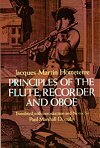 |
WW008: Principles of the Flute, Recorder and Oboe by Jacques-Martin Hotteterre translated, with introduction and notes by Paul Marshall Douglas. Dover, PB, 73 pages. The finest flutist of his time, Jacques-Martin Hotteterre (1680?-1760?) wrote this instruction book for the transverse flute, recorder and oboe. This work has considerable practical use today as well as its importance in the historical development of the flute. Most significantly it contains an extensive discussion of ornaments and embellishments of the period. Despite its importance it was not available in English prior the original publication of this translation in 1968. |
9.95
|
 |
F130: Proper Flute Playing by Trevor Wye. Novello, 1988, SS, 57 pages. This is a text companion to the Trevor Wye Practice Books. It covers the subjects of Finding a Teacher; Flute Schools; Practising; The Basic Elements of Technique, Tone; Some Tone Experiments; Auditions; The Piccolo; The Baroque Flute; Contemporary or Extended Flute Techniques; Expression, Phrasing and Style; Concerts and Competitions; Recitalists and Competitors; The Proper Pupil; The Proper Teacher; Common Problems in Teaching; Recommended Study Material and more. Some topics are covered briefly (often with references for further investigation), with the rest treated in more detail. |
19.95
|
 |
F302: Protocol: A Guide to the Collegiate Audition Process for Flute compiled and edited by Larry Clark and Daniel Schmidt. Carl Fischer, 2007, SS, 45 pages (plus piano accompaniment 35 pages). The purpose of this book is to provide high school students with or without a private teacher with a comprehensive collection of materials that will satisfy the needs of most college music auditions. It includes information on how to take an audition, music placement exams, selecting a college, and repertoire of the most often requested material. This includes Scales and Arpeggios, Orchestral Excerpts (Debussy Prélude à l'après-midi d'un faune, Dvorak Symphony No. 8 Op. 88 Movement IV, Brahms Symphony No. 4 Op. 98 Movement IV, Mendelssohn A Midsummer Night's Dream Op. 61 Scherzo, and Beethoven Leonore Overture No. 3 Op. 72b), Technical Etudes (Boehm Etude No, 20 from 24 Caprices Op. 26, Andersen Etude No. 7 from Etudes Op. 63 and Etude No. 6 from 24 Etudes Op. 33) and two complete pieces with piano accompaniment (Fauré Sicilienne Op. 80 and Mozart Concerto No. 1 in G Major). |
24.95
|
 |
F332: Seven Steps to Better Intonation, A Workbook for Flute Players by Chris Potter. Falls House Press, 2000, SS, 8 pages. This brief booklet explains how to map the intonation tendencies of your flute and how to adjust and then memorize the adjustments and test again. (Except other items with free shipping.) |
10.95
|
 |
F407: The Simple Flute - From A to Z by Michel Debost. Oxford University Press, 2002/2010, PB, 282 pages. Don't let the title fool you. Drawing from his highly praised French work, Une simple flute, distinguished flutist and teacher Michel Debost has complied a useful and imaginative introduction to playing the flute. This alphabetically arranged compendium of advice and insight covers essential topics such as breathing, articulation, and tone but also explores "jawboning," finger phrasing," "the little devils," and other quirky and vexing aspects of flute playing. The relatively new paperback edition. |
28.95
|
 |
F202: Taffanel: Genius of the Flute by Edward Blakeman. Oxford University Press, 2005, PB, 322 pages. The French flute player and conductor Paul Taffanel (1844-1908) was an extraordinary virtuoso and a major figure in fin de siècle Parisian musical life. Based on a treasure trove of private documents of Taffanel's previously unpublished letters and papers, Taffanel: Genius of the Flute recounts the rich story of his multi-faceted career as a player, conductor, composer, teacher, and leader of musical organizations. Includes much useful information on the repertoire that was being performed during this period and the Paris Conservatoire classes of 1893-1908. |
39.95
|
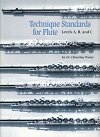 |
F334: Technique Standards for Flute: Levels A, B, and C by Christine Potter. Falls House Press, 2008, SS, 18 pages. Technique Standards for Flute, Levels A, B, and C organizes scales and arpeggios based on criteria established by the Pedagogy Committee of the National Flute Association. It presents material in three clearly defined ability levels, providing a feeling of progress and accomplishment as each level is achieved. A written test covers theory, vocabulary and listening skills. |
14.95
|
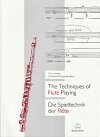 |
F020: The Techniques of Flute Playing by Carin Levine and Christina Mitropoulos-Bott. Baerenreiter, Kassel, Germany, 2002 (3rd revised printing 2009), PB, 143 pages. This book is in both English and German with the text of each language in its own column. This book places special emphasis on teaching the extended techniques it contains. Subjects covered include effects that extend the sound (4th octave, flutter tongue, harmonics, whistle tones, multiphonics, etc.), percussive effects, vibrato, circular breathing, air sounds, trills, glissando, microtonality, flute plus tape or electronics, and open forms of notation. The appendices include extensive charts of microtonal and multiphonic fingerings. German title: Die Spieltechnik der Flöte. |
66.95
|
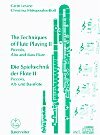 |
F147: The Techniques of Flute Playing II Piccolo, Alto and Bass Flute by Carin Levine and Christina Mitropoulos-Bott. Baerenreiter, Kassel, Germany, 2004, PB, 127 pages plus CD. This book is in both English and German with the text of each language in its own column. It covers the same topics as the first book, but illustrated with brief excerpts using the piccolo, alto or bass flute and with a CD of musical samples. The appendices include fingerings for each instrument of 4th octave, trills of the 4th octave, bisbigliando fingerings, microtonal fingerings, multiphonic fingerings, a track index for the included CD, and a discography. |
65.95
|
 |
F033: Tipbook Flute & Piccoloby Hugo Pinksterboer. The Tipbook Company, 2002, PB, 144 pages. This is a "hardware" book about the instrument and is especially recommended for anyone who wants to learn more about or needs a reference on the physical aspects of the flute. This may include adult beginners, parents of flute students, teenage students, non-flutist music education majors or band directors, etc. The book is very well illustrated and includes chapters on buying a flute, the parts of the flute and piccolo, the brands of flutes and piccolos, steps to take before and after playing, maintenance, the flute family, etc. This book replaces the very similar Rough Guide to Flute & Piccolo by the same author. |
9.95
|
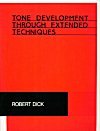 |
F015: Tone Development Through Extended Techniques by Robert Dick. Multiple Breath Music Co., SS, 60 pages. The author's perspective is that in working with the new sonorities and techniques (microtones, percussive sounds, whisper and residual tones, glissandi, etc.) will greatly benefit traditional playing. This work develops the strength flexibility and sensitivity of the embouchure and breath support, increasing the player's range of color, dynamics and projection. This book covers: throat tuning, natural harmonics, bending, whisper tones, extended timbres, diffuse tones, bright tones, "bamboo scales," timbral trills, and multiphonics. |
29.95
|
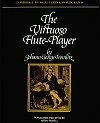 |
F021: The Virtuoso Flute-Player by Johann George Tromlitz, translated and edited by Ardal Powell. Cambridge University Press, 1991, PB, 338 pages. This is an English translation of Detailed and Thorough Tutor for Playing the Flute (1791). Tromlitz sets out to provide aspiring virtuosi with the most comprehensive of eighteenth-century flute tutors. It covers all aspects of flute-playing including intonation, articulation, flute maintenance, posture and breathing, dynamics, ornaments, musical style, cadenzas, and the construction of the flute. |
51.95
|
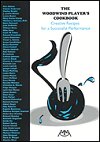 |
WW179: The Woodwind Player's Cookbook edited by Charles West. Meredith Music, 2008, PB, 178 pages. Subtitled Creative Recipes for a Successful Performance, this valuable collection of quick-to-read yet deeply insightful strategies is like finding expert trade secrets all placed in one convenient source. With outstanding records of performance, workshop clinics, recordings, research, composition, leadership and teaching, the 57 authors provide their favorite “recipes” that range from overviews of successful programs to specific topics that will inspire all levels and types of ensembles and performers. Sample “recipes” include: Developing Facility on the Bass Clarinet (J. Lawrie Bloom), Breathing Demystified (Leone Buyse), Recipe for Preventing Play-Related Health Problems (William J. Dawson, M.D.), How Should I Test a Saxophone Mouthpiece? (Eugene Rousseau), and many more. Click on the cover image to view Table of Contents. Use your browser's Back button to return. |
24.95
|
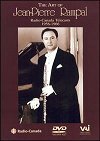 |
DVD008: The Art of Jean-Pierre Rampal. Jean-Pierre Rampal flute with Robert Veyron-Lacroix harpsichord and the McGill Chamber Orchestra conducted by Alexander Brott. 2003, Black and white, NTSC, mono, 117 minutes. This DVD has been produced from Jean-Pierre Rampal Radio-Canada Telecasts from 1956 to 1966. The video quality varies a bit but the sound is good. Works included are: François Couperin Concert Royal IV; Johann Sebastian Bach Sonata for Flute and Harpsichord G minor BWV 1020; Franz Joseph Haydn Concerto for Flute, Harpsichord, and String Orchestra in F major; Claude Debussy Syrinx; Luigi Boccherini Concerto in D major for Flute and Orchestra; Wolfgang Amadeus Mozart Concerto for Flute No. 1 in D major K. 314 and Concerto for Flute No. 2 in G major K. 314. |
29.95
|
 |
DVD007: Bolling: Suite for Flute and Jazz Piano Trio. Jean-Pierre Rampal flute, Claude Bolling piano. 1993, Color, NTSC, Dolby stereo, 40 minutes. A performance of this popular work at the Château de Versailles captured on DVD. We have the music available for this piece |
21.95
|
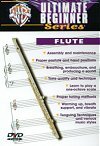 |
DVD003: Ultimate Beginner Series: Flute DVD with Elizabeth Rowe. NTSC format. Color, 2002. Time 60 minutes. This DVD covers assembling the flute, parts of the instrument, the proper way to hold the flute, and tips on breathing, forming the embouchure, and producing a sound. It continues with the playing a one-octave scale, basic music theory, warming up, tonguing, vibrato, and proper tuning methods. Printable reference material is included. |
19.95
|
|
CD SALE 25 percent discount $10.00-49.99 CD retail price total.
50 percent discount $50.00 and up CD retail price total. Conditions:, 1. Limited to CDs in stock., 2. Only items IDs starting with “CD” (music CDs)., 3. We will apply the discount when processing your order., 4. Other items may be ordered at the same time but will not receive the CD discount. |
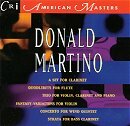 |
CD202: Donald Martino. CRI, 1995. Solo and Chamber works by Donald Martino. A Set for Clarinet (Michael Webster clarinet), Quodlibets for Flute (Samuel Baron flute), Trio for Violin, Clarinet & Piano (Arthur Bloom clarinet, Gilbert Kalish piano, Paul Zukofsky violin), Fantasy-Variations for Violin (Paul Zukofsky violin), Concerto for Wind Quintet (Rutgers University Contemporary Chamber Ensemble conducted by Arthur Weisberg), and Strata for Bass Clarinet (Dennis Smylie bass clarinet). |
6.95
|
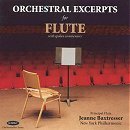 |
CD070: Orchestral Excerpts for Flute. Jeanne Baxtresser, flute. Summit, 1996. Key excerpts from the symphonic repertoire with spoken commentary. Bach Aus Liebe from St. Matthew Passion and Domine Deus from Mass in B minor; Beethoven Symphonies No. 3 and No. 4, Leonore No. 3; Bizet Entr'acte from Carmen and Menuet from L'Arlesienne; Brahms Symphonies No. 1 and No. 4; Debussy Afternoon of a Faun; Dvorak Symphony No. 8; Gluck Menuet & Dance from Orpheus; Hindemith Symphonic Metamorphoses; Mendelssohn Midsummer Night's Dream; Prokofiev Classical Symphony and Peter and the Wolf; Ravel Boléro and Daphnis et Chloé; Rimsky-Korsakov Russian Easter Overture and Capriccio Espagnol; Rossini William Tell Overture; Saint-Saëns Carnival of the Animals; Strauss Salome; Stravinsky Petrouchka and Chant du Rossignol; and Tchaikovsky Symphony No. 4. |
16.00
|
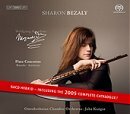 |
CD210: Mozart - Flute Concertos. Sharon Bezaly flute with the Ostrobothnian Chamber Orchestra conducted by Juha Kangas. BIS, 2005. This is a hybrid disc: SACD Surround 5.0/SACD Stereo/CD Stereo. Sharon Bezaly began her study of the flute in Israel and continued studies at the Conservatoire National Supérieur de Musique in Paris under Alain Marion, Raymond Guiot and Maurice Bourgue, winning the Academy's first prizes for flute and chamber music. She was subsequently invited by Sándor Végh to play as principal flautist in his Camerata Academica Salzburg, a position she held until the maestro's death in 1997. Since then Sharon Bezaly has devoted herself to a solo career performing frequently in Europe and Asia. Wolfgang Amadeus Mozart Concerto in G major KV 313, Andante in C major KV 315, Rondo in D major, KV 184 Anh. - Allegretto grazioso, and Concerto in D major KV 314. Cadenzas for these performances have been written by Finnish composer Kalevi Aho. This CD is special promotion that includes a 243 page BIS catalog and is sold for $5.00 less than the usual price of BIS CDs. |
11.95
|
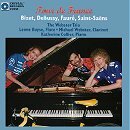 |
CD215: Tour de France. The Webster Trio. Michael Webster clarinet, Leone Buyse flute, and Katherine Collier piano. Gabriel Fauré Dolly Suite (flute, clarinet, and piano; trans. Webster), Fauré Morceau de concours (flute and piano; arr. Hulme-Brieff), Camille Saint-Saëns Tarantella Op. 6, (flute, clarinet, and piano), Claude Debussy Petite Pièce & Première Rhapsodie (clarinet and piano), Syrinx (solo flute), Prélude à l'après-midi d'un faune (flute, clarinet and piano; trans Webster), Georges Bizet Jeux d'enfants, (flute/piccolo, clarinet, and piano; trans Webster). We no longer carry this CD. You can order it here from Amazon. | |
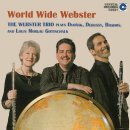 |
CD216: World Wide Webster. The Webster Trio. Michael Webster clarinet, Leone Buyse flute, and Robert Moeling piano. Antonin Dvorak arr. Webster Slavonic Dances, Claude Debussy (arr. Webster) Petite Suite, Johannes Brahms Hungarian Dances (Nos. 5,6,7, 13,14,16, amd 21), Louis Moreau Gottschalk Four Pieces (La Jota Aragonesa, Souvenir de la Havane, Souvenir de Cuba, Grande Tarantelle). We no longer carry this CD. You can order it here from Amazon. | |
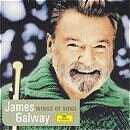 |
CD124: Wings of Song. James Galway flute with the London Symphony Orchestra conducted by Klauspeter Seibel. Deutsche Grammophon, 2004. Popular Classical Melodies for flute and orchestra. Maurice Ravel Pavane pour une infante défunte, Erik Satie Gymnopédie No. 3, Franz Schubert Ave Maria, Traditional The Dawning of the Day, Joaquín Rodrigo En Aranjuez con tu amor, Johann Sebastian Bach Siciliano, Camille Saint-Saëns Mon cœur s'ouvre à ta voix, Vincenzo Bellini Casta diva, Gabriel Fauré Pie Jesu, Jacques Offenbach Barcarolle, Richard Wagner Der Engel, Christoph Willibald Gluck Che farò senza Euridice, Antonín Dvorák Lento (from String Quartet No.12 in F major), Johannes Brahms Wiegenlied, Howard Shore A Lord of the Rings Suite, and John Denver Annie's Song. |
16.95
|
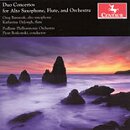 |
CD580: Duo Concertos for Alto Saxophone, Flute, and Orchestra. Greg Banaszak alto saxophone, Katherine DeJongh flute with the Podlasie Philharmonic Orchestra conducted by Piotr Borkowski. Centaur, 2011. David Morgan Reflections and Meditations for Alto Saxophone, Flute, and Orchestra; Arthur Honegger arr. Londeix Concerto da Camera Op. 188 for Alto Saxophone, Flute, and String Orchestra; Pawel Lukaszewski Trinity Concerto for Alto Saxophone and String Orchestra; Subaram Raman A Song Not Sung for Alto Saxophone and String Orchestra; Russell Peterson Concerto for Alto Saxophone, Flute, and String Orchestra. |
16.95
|
 |
CD522: Barn Dances. Leonard Garrison flute and Shannon Scott clarinet, with Jay Mauchley piano. Albany, 2010. All flute and clarinet duets except for Barn Dances which includes piano and as noted. Libby Larsen Barn Dances, Jean Cartan Sonatine, John Addison Five Dialogues, Dan Welcher Reversible Jackets, Roger Nixon Two Duos for piccolo and E-flat clarinet, Robert Wykes Three Faces of Friendship, Jürg Wyttenbach Serenade, Robert Russell Bennett Suite, and Robert Dickow Four Little Dances. |
16.95
|
 |
CD260: Ernst Krenek: Chamber Music with Clarinet. Csaba Klenyán clarinet with Zoltán Gyöngyössy flute and Ildikó Cs. Nagy piano and other artists. Hungaroton, 2006. Ernst Krenek (1900-1991) was an Austrian born composer (of Czech heritage) who lived in the United States from 1938 on. Alpbach-Quintet for Wind Quintet and Percussion Op. 180 (1962), Monologue for Clarinet Solo Op. 157 (1956), Sonatina for Flute and Clarinet Op. 92/2b (1942), Little Suite for Clarinet and Piano Op. 28 (1924), Invention for Flute and Clarinet Op. 127a (1951), Trio for Violin, Clarinet and Piano Op. 108 (1946), and Suite for Clarinet and Strings Op. 148a (1955).We no longer have this CD. You can order the music from Amazon. | |
 |
CD259: Robert Muczynski, Complete Works for Flute. Alexandra Hawley flute with Robert Muczynski piano and the Stanford Woodwind Quintet. Naxos, 1998. Robert Muczynski: Quintet for Winds Op. 45, Duos for Flutes Op. 34 (with Jean-Pierre Rampal flute), Moments for Flute and Piano Op. 47, Fragments for Woodwind Trio (with Gregory Dufford clarinet and Rufus Olivier bassoon), Three Preludes for Unaccompanied Flute Op. 18, Movements for Wind Quintet Op. 16, Duos for Flute and Clarinet (with Gregory Dufford clarinet), Sonata for Flute and Piano Op. 14. |
8.95
|
 |
CD292: Kuri - Romantic Flute. Masahide Kurita flute with Len Vorster piano. Move Records, 2000. Carl Nielsen The Fog is Lifting Op. 41 and Fantasy Pieces Op. 2, Joachim Andersen Hungary National Fantasy Op. 59 No. 6, G.C. Percival In the Forest, Gaetano Donizetti Sonata in C Major, John Lemmoné Graceful Dance, Carl Reinecke Ballade Op. 288, Francesco Morlacchi The Swiss Shepherd, Arthur Honegger Danse de la chèvre, and Kazuo Fukushima Mei. |
15.95
|
 |
CD255: The Clouds of Magellan (The Music of Eugene O'Brien, Vol. 1). The Indian University New Music Ensemble and Concert Orchestra conducted by David Dzubay. Indiana University School of Music, 2003. All works are by Eugene O'Brien (1945-) an American composer and Professor of Music (Composition) at Indian University: Embarking for Cythera;, The Clouds of Magellan; Fancies and Goodnights with Kathryn Lukas flute & piccolo, Eli Eban clarinet, and Bruce Bransby Double Bass; Black Fugatos; and In the Country of Last Things with Bridget Parker soprano. |
16.00
|
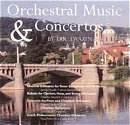 |
CD122: Eric Ewazen Orchestral Music & Concertos. Marya Martin flute with the Czech Philharmonic Chamber Orchestra conducted by Paul Polivnick. Albany Records, 2002. Eric Ewazen Concerto for Flute and Chamber Orchestra; Ballade for Clarinet, Harp, and String Orchestra with Charles Neidich clarinet; Classical Concerto for Tenor Saxophone and Orchestra with James Houlik Tenor Saxophone; and Chamber Symphony with Eric Ewazen piano. |
17.95
|
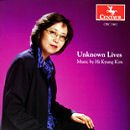 |
CD348: Unknown Lives - Music by Hi Kyung Kim. Centaur, 2000. Hi Kyung Kim: Unknown Lives (for flute, violin, clarinet, viola, cello, piano, and percussion) performed by the Empyrean Ensemble, Instant Breath Leta Miller flute, Intrigues John Sackett clarinet and Michael Seth Orland prepared piano, After the Fall John Sackett clarinet and Peter Josheff bass clarinet, Breaking the Silence (violin, cello, and piano) performed by Speculum Musicae. |
16.00
|
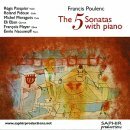 |
CD257: Poulenc, The 5 Sonatas with Piano. Eli Eban clarinet, Régis Pasquier violin, Roland Pidoux cello, Michel Moraguès flute, François Meyer Oboe with Émile Naoumoff piano. All by Francis Poulenc Sonate for clarinet and piano, Sonate for flute and piano, Sonate for violin and piano, Sonate for violincello and piano, and Sonate for oboe and piano. |
16.00
|
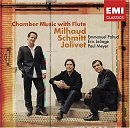 |
CD220: The French Connection. Emmanuel Pahud flute, Paul Meyer clarinet, and Eric Le Sage piano (Les Vents Français). EMI Classics, 2005. Except where noted, all pieces are for flute, clarinet, and piano. Dmitry Shostakovich Waltz No. 3 and No. 4 (arr. Atovmyan); Heitor Villa-Lobos Chôros No. 2 for flute & clarinet; Florent Schmitt Sonatine en trio Op. 85; Darius Milhaud Sonata, for flute, clarinet, oboe & piano Op. 47 with François Meyer oboe; André Jolivet Sonatine for flute & clarinet; and Maurice Emmanuel Sonate Op. 11. |
16.95
|
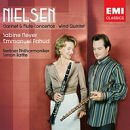 |
CD341: Nielsen Clarinet & Flute Concertos - Wind Quintet. Emmanuel Pahud flute Sabine Meyer clarinet with the Berliner Philharmoniker conducted by Simon Rattle. EMI Classics. 2007. Carl Nielsen Flute Concerto, Clarinet Concerto, and Wind Quintet (with Pahud, Meyer, Stefan Schweigert bassoon, Jonathan Kelly oboe & cor anglais, and Radek Baborák horn). We no longer have this CD. You can order it here from Amazon. | |
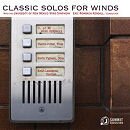 |
CD498: Classic Solos for Winds. Valerie Potter flute, Kevin Vigneau oboe, and Keith Lemmons clarinet with the University of New Mexico Wind Symphony conducted by Eric Rombach-Kendall. Summit Education, 2007. Georges Bizet arranged by François Borne Carmen Fantasy, Cécil Chaminade Concertino for Flute Op. 107, Frigyes Hidas Concerto No. 2 for Oboe, Henri Rabaud Solo de Concours for clarinet, Andre Messager Solo de Concours for clarinet, and Carl Maria von Weber Concertino for Clarinet Op. 26. |
16.00
|
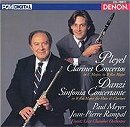 |
CD128: Pleyel Clarinet Concertos, Danzi Sinfonia Concertante. Paul Meyer clarinet and Jean-Pierre Rampal flute with the Franz Liszt Academy Chamber Orchestra conducted by Jean-Pierre Rampal. Denon, January 1993. Ignaz Joseph Pleyel Concerto for Clarinet and Orchestra in F-flat major and Concerto for Clarinet and Orchestra in C major. Franz Danzi Sinfonia Concertante for Flute and Clarinet in B-flat major Op. 41. |
11.95
|
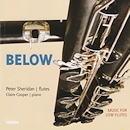 |
CD475: Below, Music for Low Flutes. Peter Sheridan alto, bass, contrabass and sub-contrabass flutes, Sheridon Stokes bass flute, Irish flute and piccolo, Lisa-Maree Amos C Flute with Claire Cooper piano and other artists. Move Records, 2009. Gary Schocker A Small Sonata for a Large Flute, Sheridon Stokes Irish in the Lowlands, arr. by P Sheridan Virtuosic Etudes, Philippe Gaubert trans Sawoski Madrigal, Patrick Neher City Vignettes, Gary Schocker Adventures Under a Leaf, Bruce Lawrence Elegy, Vinny Golia There Is A Difference Between Apples And Men, Peter Sheridan And The Giant Began To Dance, and Alex Shapiro Below. |
17.95
|
 |
CD095: American Landscape. Richard Sherman, flute with Ralph Votapek piano. Summit, 2000. All the works represented here are either world premiere recordings or first recordings by a flutist. Combined, these pieces explore the range of expression in American compositional style, from spiky and rhythmic to lyrical and transparent. William Wallace Toccata in Ten (homage to Prokofiev), Aaron Copland Sonata for Flute & Piano (arr. of Sonata for Violin & Piano), James Willey Duo, Kent Wheeler Kennan Threnody, Amy Marcy Cheney Beach Sonata in A minor, Op. 34. |
16.00
|
 |
CD098: Flute Sonatas. Richard Sherman, flute with Ralph Votapek piano. Summit, 2000. Germaine Tailleferre Deuxieme Sonata and Forlane, Francis Poulenc Vocalise, Alexandre Tansman Sonatine, Jindrich Feld Sonate, Jean Francaix Sonata. |
16.00
|
 |
CD097: Voices Through Time. Emily Skala, flute with Norman Krieger, piano. Summit, 2002. Works of Brahms and Schubert for flute and piano. Johannes Brahms Sonata Op. 120 No. 1 in F minor and No. 2 in E-flat major (from the clarinet sonatas). Franz Schubert Theme and Variations on "Trockne Blumen" from "Die Schöne Müllerin" presented for the first time with the original fifth variation as it appears in the Baerenreiter edition. |
16.00
|
 |
CD256: Marion Bauer: Orchestral and Chamber Works. Ambache Chamber Orchestra and Ensemble. Naxos, 2005. Music by Marion Bauer (1882-1955). She was Nadia Boulanger's first American Student. In addition to composing, she was a critic and reviewer, wrote several books about music, and was on the music faculty of New York University for 25 years. This CD includes:A Lament on an African Theme Op. 20a (1927), Concertino for Oboe, Clarinet and Strings Op. 32b (1939-43, with Jeremy Polmear oboe and Eli Eban clarinet), Trio Sonata No. 1 for Flute, Cello and Piano Op. 40 (1944, with Jonathan Snowden flute, Judith Herbert cello and Diana Ambache piano), Symphonic Suite for Strings Op. 33 (1940), Duo for Oboe and Clarinet Op. 25 (1932, Jeremy Polmear oboe and Eli Eban clarinet), and American Youth Concerto Op. 36 (1943, Diana Ambache piano and orchestra). |
9.95
|
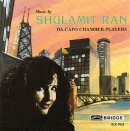 |
CD206: Music by Shulamit Ran. Da Capo Chamber Players: Patricia Spencer flute, Laura Flax clarinet, Eric Wyrick violin, Erica Kiesewetter violin, Misha Amory viola, Andre Emelianoff cello, and Sarah Rothenberg piano. Bridge Records, 1995. The pieces on this CD are all by Israeli-born composer Shulamit Ran: Concerto da Camera II (clarinet, string quartet, and piano), East Wind (flute solo), Inscriptions (violin solo), Mirage (flute, clarinet, violin, cello, and piano), For an Actor: Monologue for Clarinet (solo), and Private Games (clarinet and cello). |
16.95
|
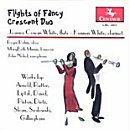 |
CD108: Flights of Fancy - Crescent Duo. Joanna Cowan White, flute, Kennen White, clarinet and bass clarinet with Roger Rehm, oboe; MaryBeth Minnis, bassoon; and John Nichol, alto saxophone. Centaur, 2002. This CD features six duets for flute and clarinet or bass clarinet and three pieces with flute, clarinet and an additional woodwind instrument. John Rutter Three American Miniatures for flute and clarinet; Malcolm Arnold Divertimento for Flute, Oboe, and Clarinet; Thomas Christian David Sonata for flute and clarinet; David Liptak Duo for flute and clarinet; Norman C. Dietz Dialog (flute and bass clarinet); Walter Piston Three Pieces for flute, clarinet and bassoon; Donald Sloan Five Flights of Fancy for flute and clarinet; Antoni Szalowski Duo for Flute and Clarinet; David R. Gillingham American Counterpoint for flute, clarinet and alto saxophone. We no longer carry this CD. You can order it here from Amazon. | |
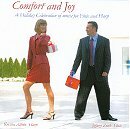 |
CD061: Comfort and Joy. Jeffery Zook, flute with Krestin Allvin, harp and strings and percussion. High Heel Records. A holiday celebration of music for flute and harp. Holly and the Ivy, Comfort and Joy, Bizet Winter Walk, Corelli Christmas Concerto, A La Nina Nana, We Three Kings/Deck the Halls, Berlioz L'Enfance du Christ, Bach Pastorale from Christmas Oratorio, Fantasy on a Catalan Carol, Fantasy on a Basque Carol, Greensleeves, I Wonder as I Wander, Impressions of Childhood, Variations Pastorales, Joseph Went a'Walking, Christmas Images. |
14.95
|
Bindings: HB: Hard Bound, PB: Perfect Bound (paperback with square spine), SS: Saddle Stitch (paper, folded and stapled), SB: Spiral Bound (plastic or metal)