Saxophone Books

This is the front page for our saxophone items and is where saxphone books (and saxophone jazz books) are listed.
Click the drop down menus under the Saxophone menu for Music, CDs, Play Along CDs, and Videos. The jazz books are below the main listing.
These books are in order by title.
You may search for a title, author, or any other text on this page by using the
Edit menu Find command (shortcut Ctrl+F or Mac Command+F).
Books marked "New!" in gold type are new publications. Books marked "New!" in teal type are new to our stock.

|
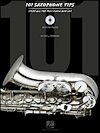
S1241: 101 Saxophone Tips by Eric J. Morones. Hal Leonard, 2004, PB, 53 pages + CD. This book presents valuable how-to insight that saxophone players of all styles and levels can benefit from. The text, photos, music, diagrams, and accompanying CD provide a terrific, easy-to-use resource for a variety of topics, including: techniques; maintenance; equipment; practicing; recording; and performance. While many of the tips will be of value to players of all types of music the examples on the CD are primarily about the jazz tips. Click on the cover image to view the table of contents. |
14.95

|
|
S002: The Art of Saxophone Playing by Larry Teal. Summy-Birchard. 1963. SS, 111 pages. A comprehensive guide to the saxophone. Subjects include the instrument, the mouthpiece, the reed, playing position, breathing technique, the embouchure, tone quality, vibrato, intonation, developing technique, attack and release, phrasing and interpretation, doubling, the altissimo register, and selected literature. We also have the author's The Saxophonist's Manual which covers many of these concepts in briefer fashion and is more suitable for use during lessons. |
18.95
|
|
S012: El Arte de Tocar el Saxofón por Larry Teal, traducido por Raúl Guiterrez. Summy-Birchard, 1997. SS, 111 pages. Spanish translation of The Art of Saxophone Playing. Overstock Special while supplies last. Regular price is $19.95. |
14.95
|
|
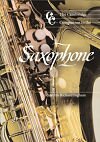
S003: The Cambridge Companion to the Saxophone by Richard Ingham. Cambridge University Press, 1998. PB, 225 pages. This is the first comprehensive guide to the saxophone, its history, technical development and repertoire. Contents: invention and development (Thomas Liley), in the twentieth century (Don Ashton), influential soloists (Thomas Dryer-Beers), the repertoire heritage (Thomas Liley), the saxophone quartet (Richard Ingham), the mechanics of playing the saxophone (three chapters), the professional player (three chapters), jazz and the saxophone (Richard Ingham), rock and the saxophone (Richard Ingham and John Helliwell), the saxophone today (two chapters), and teaching the saxophone (Kyle Horch). |
39.95
|
|
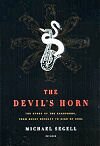
S242: The Devil's Horn by Michael Segell. Farrar, Straus and Giroux, 2006, PB, 324 pages. Subtitled The Story of the Saxophone, from Noisy Novelty to the King of Cool, this book traces the 160-year history of the saxophone-a horn that created a sound never before heard in nature, and that from the moment it debuted has aroused both positive and negative passions among all who hear it. Segell outlines the saxophone's fascinating history while he highlights many of its legendary players, including Benny Carter, Illinois Jacquet, Sonny Rollins, Lee Konitz, Phil Woods, Branford Marsalis, and Michael Brecker. The Devil's Horn explores the saxophone's intersections with social movement and change, the innovative acoustical science behind the instrument, its struggles in the world of "legit" music, and the mystical properties that seduce all who fall under its influence. Colorful, evocative, and richly informed, The Devil's Horn is an ingenious portrait of one of the most popular instruments in the world. |
18.95
|
|
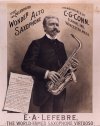
S031: E.A. Lefebre: Preeminent Saxophonist of the Nineteenth Century by James R. Noyes. Doctoral dissertation, 2000, SB, 293 pages. The career of Edward A. Lefebre (1834-1911) is one of the most meaningful and substantial in the history of the saxophone. His monumental efforts to popularize the saxophone were felt, first in Europe and Africa, and eventually in the United States. He was a member of the Gilmore and Sousa bands and worked with C.G. Conn to improve the saxophone. This book covers his life and work in detail. |
44.95
|
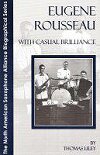 |
S701: Eugene Rousseau: With Casual Brilliance by Thomas Liley. North American Saxophone Alliance, 2011, PB, 231 pages. Thomas Liley, presents the life and pedagogy of the internationally famous saxophone performer and teacher Eugene Rousseau (1932-). In addition to drawing on written sources for this book, the author has used his personal observations and the notes he has made since first meeting Rousseau in 1968. |
24.95
|
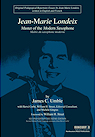 |
 S009: Jean-Marie Londeix Master of the Modern Saxophone by James C. Umble with Herve Corbe, Willam H. Street (Editorial Consultant), and Michele Gingras; Second Edition. Roncorp, 2021, PB, 666 pages. Jean-Marie Londeix (1932-) is a pioneer of the modern classical saxophonist. Many compositions are written for him, and he is one of the most well-known classical saxophonists of the 20th and 21st centuries. This book is not only a biography, but has essays and discussions of how he played some of the most famous works written for the saxophone. The book is written in both English and French. S009: Jean-Marie Londeix Master of the Modern Saxophone by James C. Umble with Herve Corbe, Willam H. Street (Editorial Consultant), and Michele Gingras; Second Edition. Roncorp, 2021, PB, 666 pages. Jean-Marie Londeix (1932-) is a pioneer of the modern classical saxophonist. Many compositions are written for him, and he is one of the most well-known classical saxophonists of the 20th and 21st centuries. This book is not only a biography, but has essays and discussions of how he played some of the most famous works written for the saxophone. The book is written in both English and French. |
98.95
|
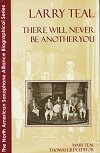 |
S474: Larry Teal: There Will Never Be Another You by Mary Teal, Thomas Liley editor. North American Saxophone Alliance, 2008, PB, 262 pages. This book traces the life of the Larry Teal (1905-1984), the first university professor of saxophone in the United States. The biography follows Larry Teal’s career from vaudeville, the popular music of the 1920s, theater and radio orchestras, and the Detroit Symphony Orchestra through his groundbreaking tenure at the University of Michigan. Teal’s relationship with Bernhard Heiden, who wrote his famous Sonata for him is discussed, as well as Teal’s historic performances of Glazounov’s Concerto and the Concertino da Camera by Ibert. The soft cover book is 272 pages in length and is generously illustrated with 24 photographs. It provides a window to the history of the saxophone in the United States and how it was influenced by one of the instrument's most significant teachers. |
19.95
|
|
S995: Londeix Guide to the Saxophone Repertoire 1844-2012 edited by Bruce Ronkin. Roncorp Publications, 2012, HB, 776 pages. The latest version of this book is 130 pages longer than the previous edition. It is in French and English. More than 29,000 works for saxophone from 1844 to 2012–the entire lifespan of the saxophone–are cross-indexed by composer and instrumentation. Each entry includes valuable information: title, duration, year of composition, publisher, arranger, dedicatee, movement titles, and biographical and stylistic information about the composer. Appendices include addresses of publishers and composers. This publication indexes all works listed in the previous four editions (1971, 1985, 1994, and 2003), as well as thousands of new titles. It is an indispensable reference guide for all libraries and saxophonists.
|
84.95
|
|
S035: The Original 1949 Saxophone Concerto of Ingolf Dahl by Paul M. Cohen. To the Fore Publishers, 1985. PB, 156 pages. Paul Cohen's definitive dissertation on the origin and history of the original (1949) version of the Concerto for Alto Saxophone, including correspondence with between Sigurd Rascher and Dahl, notes and sketches, history of the revisions, the relationship to the Sinfonietta for Concert Band, and a comparison of the original version to the published version. We have the current edition of this Concerto with a piano reduction. |
29.95
|
|
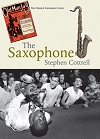
 S1170: The Saxophone by Stephen Cottrell. Yale University Press, 2012, HB, 412 pages. Stephen Cottrell (1962-) is a saxophonist and professor of music at City University London. In the first fully comprehensive study of one of the world’s most iconic musical instruments, Stephen Cottrell examines the saxophone’s various social, historical, and cultural trajectories, and illustrates how and why this instrument, with its idiosyncratic shape and sound, became important for so many different music-makers around the world. The chapters are: 1. The life and times of Adolphe Sax, 2. The saxophone family, 3. The saxophone in the nineteenth century, 4. Early twentieth-century light and popular music, 5. The saxophone in jazz, 6. The classical saxophone, 7. Modernism and post modernism, and 8. The saxophone as a symbol and icon. Many illustrations. Because of the weight of this book, Media Mail shipping charges will be based on the actual cost of postage. New Lower Price! Was $84.95. S1170: The Saxophone by Stephen Cottrell. Yale University Press, 2012, HB, 412 pages. Stephen Cottrell (1962-) is a saxophonist and professor of music at City University London. In the first fully comprehensive study of one of the world’s most iconic musical instruments, Stephen Cottrell examines the saxophone’s various social, historical, and cultural trajectories, and illustrates how and why this instrument, with its idiosyncratic shape and sound, became important for so many different music-makers around the world. The chapters are: 1. The life and times of Adolphe Sax, 2. The saxophone family, 3. The saxophone in the nineteenth century, 4. Early twentieth-century light and popular music, 5. The saxophone in jazz, 6. The classical saxophone, 7. Modernism and post modernism, and 8. The saxophone as a symbol and icon. Many illustrations. Because of the weight of this book, Media Mail shipping charges will be based on the actual cost of postage. New Lower Price! Was $84.95. |
49.95
|
|
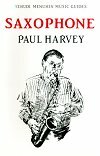
S011: Saxophone by Paul Harvey. Kahn & Averill, London, 1995, PB, 149 pages. A very useful reference book on the saxophone. It includes history, the saxophone family, parts of the saxophone, fingering, tone production, special effects, doubling, repertoire (orchestral, quartet, and solo), methods, influential saxophonists, discography, unusual saxophones, and the saxophone today. |
18.95
|
|
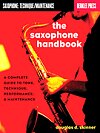
S958: The Saxophone Handbook by Douglas D. Skinner. Berklee Press, 2013, PB, 90 pages. A complete guide to playing and maintenance, this handbook offers essential information on all dimensions of the saxophone. It provides an overview of technique, such as breathing, fingerings, articulations, and more. Exercises will help you develop your sense of timing, facility, and sound. Extensive directions (with illustrations) on repairs will help you maintain your instrument and customize it to support your own playing style and preferences. You'll learn to fine-tune your reed, recork the keys, fix binding keys, replace pads, and many other repairs and adjustments. You'll also learn to improve your tone, intonation, and flexibility while playing with proper technique. While saxophone repair is only one of five chapters in this book, it does an excellent job of covering basic repairs and adjustments. |
14.95
|
|
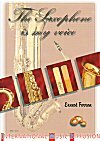
S060: The Saxophone Is My Voice by Ernest Ferron translated from the French by Jacqueline Rose. International Music Diffusion, 1997, PB, 117 pages. Ernest Ferron has drawn from his experience as a master instrument maker and from his contact with leading instrumentalists to produce a synthesis of his knowledge. The first 48 pages covers how a saxophone functions with details on Adolphe Sax's parabola, the neck, bow, tone holes, bell, mouthpiece, reeds, and tuning. The rest of the book is on the tools and techniques of saxophone repair and adjustment. |
36.95
|
|
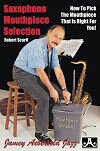
WW026: Saxophone Mouthpiece Selection by Robert Scarff. Jamey Aebersold Jazz, 2006, SB, 88 pages. This book contains information on mouthpiece parts and design, guidelines in selecting a mouthpiece for the type of sound you need, facing charts for commercial saxophone and clarinet mouthpieces, and chamber designations of some representative brands of saxophone mouthpieces. This book also includes guidance on reed adjustments, some maintenance tips, and some musician jokes. While this book is primarily oriented toward the saxophonist, clarinetists will also find useful information here. |
9.95
|
 |
S1272: Saxophone Secrets, 60 Performance Strategies for the Advanced Saxophonist by Tracy Lee Heavner. Scarecrow Press, 2013, PB, 152 pages. Tracy Heavner’s Saxophone Secrets provides advanced saxophonists with 60 performance secrets that will assist in their musical development. This work is the result of 30 years of personal teaching and performance experience. Heavner offers both intermediate players and advanced professionals a wide variety of techniques, which will greatly improve any saxophonist’s performance ability. Click on the cover image to view the table of contents. |
47.95
|
|
S400: Saxophone Studying Method by Jean-Marie Londeix. Lemoine, 1997, SB, 85 pages. This is not a method book in the conventional sense, but instead is a guide and text book for studying the saxophone. It is in four languages: French, Japanese, English and Spanish, each in their own vertical column. There are many specific references to books of study and saxophone repertoire. Subjects covered include basic techniques and equipment, etudes, and literature (both orchestral and solo). A very detailed book with many diagrams and musical examples. |
35.95
|
|
S017: Tipbook Saxophone by Hugo Pinksterboer. The Tipbook Company, 2007, PB, 216 pages. A new and much longer edition of this interesting and well illustrated book that focuses on saxophone construction, selection and maintenance (including mouthpieces and reeds), resources for learning to play, and a fingering chart. It also has links to more information on the Internet. This book will be of interest to adult and teenage beginners and the parents of younger students. It will also be useful for band directors and music education students who aren't woodwind specialists. |
14.95
|
|
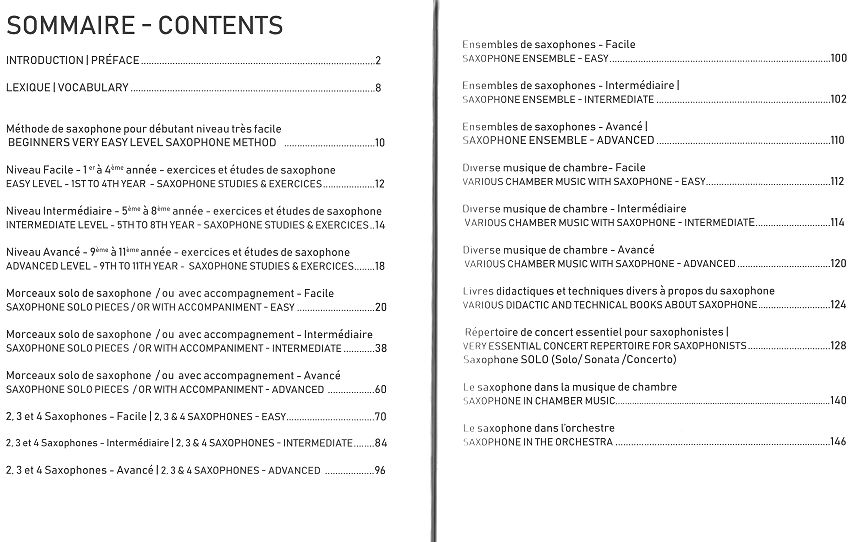
S1298: Very Essential Concert & Pedagogic Repertoire for Saxophonists by Nicolas Prost, International Music Diffusion, 2018, PB, 158 pages. French saxophonist Nicolas Proust has compiled this detailed work which covers a major portion of the saxophone repertoire including methods, studies, solos, ensembles chamber music and the saxophone and the saxophone in the orchestra. See the table of contents for the categories. Click on the cover image to view Table of Contents. |
21.95
|
|
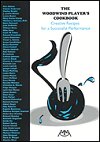
WW179: The Woodwind Player's Cookbook edited by Charles West. Meredith Music, 2008, PB, 178 pages. Subtitled Creative Recipes for a Successful Performance, this valuable collection of quick-to-read yet deeply insightful strategies is like finding expert trade secrets all placed in one convenient source. With outstanding records of performance, workshop clinics, recordings, research, composition, leadership and teaching, the 57 authors provide their favorite “recipes” that range from overviews of successful programs to specific topics that will inspire all levels and types of ensembles and performers. Sample “recipes” include: Developing Facility on the Bass Clarinet (J. Lawrie Bloom), Breathing Demystified (Leone Buyse), Recipe for Preventing Play-Related Health Problems (William J. Dawson, M.D.), How Should I Test a Saxophone Mouthpiece? (Eugene Rousseau), and many more. Click on the cover image to view Table of Contents. |
24.95
|
|
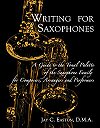
S684: Writing for Saxophones by Jay C. Easton. Baxter Music Publishing, 2006, SB, 302 pages + CD. Subtitled A Guide to the Tonal Palette of the Saxophone Family for Composers, Arrangers and Performers, this is a practical guide to understanding and effectively utilizing the sounds of this instrumental group as it advances into the twenty-first century. Over ninety printed solo and ensemble examples in the book have been recorded on the enclosed audio CD, which allows the reader to explore the distinct personalities of the various saxophones and integrate their individual musical characteristics into his or her tonal imagination. Saxophone performers and enthusiasts will find enjoyment and edification within these pages, and composers and arrangers who wish to explore the many possibilities offered by the saxophone family will find this book to be an especially valuable resource. Because of the weight of this book, Media Mail (bookrate) shipping charges will be based on the actual cost of postage. |
39.95
|
Bindings: HB: Hard Bound, PB: Perfect Bound (paperback with square spine), SS: Saddle Stitch (paper, folded and stapled), SB: Spiral Bound (plastic or metal)