Clarinet Methods



Music marked "New!" in gold type is a new publication. Music marked "New!" in teal type is new to our stock.
|
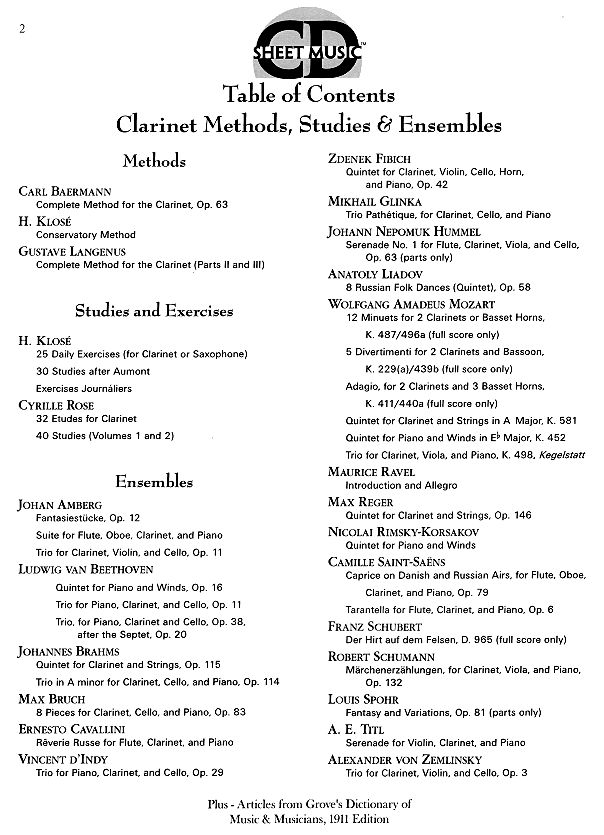
C1574: Clarinet Methods, Studies & Ensembles. CD Sheet Music LLC, 2010, 2100+ pages. This collection makes available eight essential clarinet methods, studies and exercises, as well as over 30 works for clarinet with instruments including duos, trios and quartets by 20 familiar and lesser known composers from the 18th, 19th and early 20th centuries. Scores and parts are included for many ensemble works. Methods, Studies & Exercises include: Baermann (Complete Method for Clarinet, Op. 63); Klosé (Conservatory Method, 25 Daily Exercises, 30 Studies after Augmont); Langenus (Complete Method for Clarinet); Rose (32 Etudes for Clarinet). Ensembles include: Amberg (Fantasiestücke, Suite for Flute, Oboe, Clarinet & Piano); Beethoven (Quintet for Piano and Winds); Brahms (Quintet for Clarinet & Strings, Trio for Clarinet, Cello & Piano); Bruch (8 Piece for Clarinet, Cello & Piano); Cavallini (Rêverie Russe for Flute, Clarinet, and Piano); d'Indy (Trio for Piano, Clarinet, and Cello); Fibich (Quintet for Clarinet, Violin, Cello, Horn, & Piano); Glinka (Trio Pathétique, for Clarinet, Cello, & Piano); Hummel (Serenade No. 1 for Flute, Clarinet, Viola, & Cello); Liadov (8 Russian Folk Dances); Mozart (Twelve Minuets for 2 Clarinets or Basset Horns, Five Divertimenti for 2 Clarinets & Bassoon, Quintet for Clarinet & Strings, Quintet for Piano & Winds, Trio for Clarinet, Viola & Piano); Ravel (Introduction & Allegro); Reger (Quintet for Clarinet & Strings); Rimsky-Korsakov (Quintet for Piano & Winds); Saint-Saëns (Tarantella for Flute, Clarinet & Piano); Schubert (Der Hirt auf dem Felsen); Schumann (Märchenerzählungen, for Clarinet, Viola & Piano); Spohr (Fantasy & Variations); Titl (Serenade for Violin, Clarinet & Piano); Zemlinsky (Trio for Clarinet, Violin & Cello). Also includes composer biographies and relevant articles from the 1911 edition of Grove's Dictionary of Music and Musicians. Click on the image cover to view the complete Table of Contents. (Except other items with free shipping.) |
19.95

|
|
C106: Baermann Method for Clarinet Divisions 1-2 by Carl Baermann edited by Gustave Langenus. Carl Fischer, PB, 92 pages. The first two parts of the famous Baermann Method. Part one is theoretical; part two is "Preparatory Studies." |
18.95
|
|
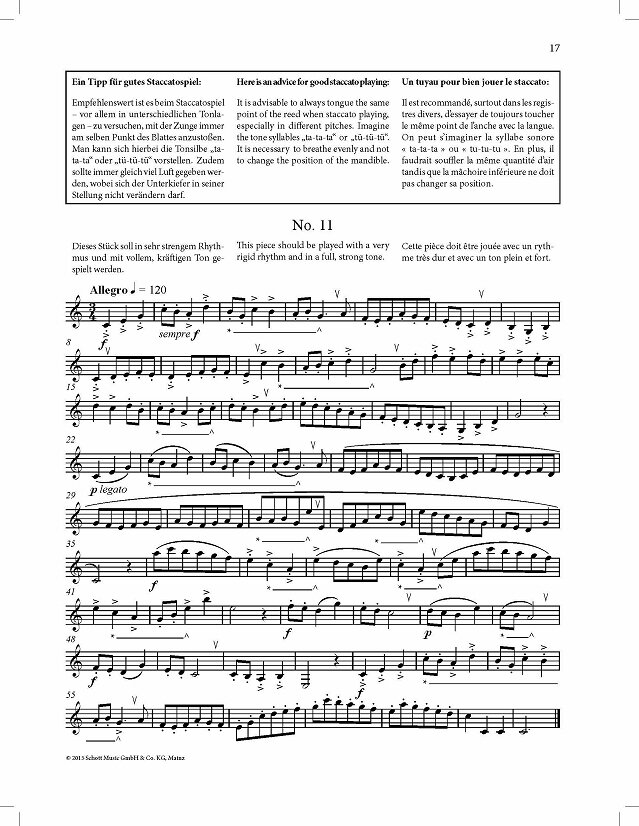
C2360: Baermann Method for Clarinet Op. 63 Volume 1 by Carl Baermann edited by Robert Erdt. Schott, 2015, SS, 73 pages. The musical text is based on the first edition of the method. Only a few differences concerning the articulation as well as some misprints and typographical errors were revised. By deleting the historical fingering instructions for the German fingering system (the volume includes modern fingering charts for the German system and the Boehm system), the clarinet method not only has a clean and, compared to the original, more clearly structured layout, but can also be used universally (the text is in German, English and French). The content of the text and the performance directions of the original were linguistically modernized and occasionally extended by further ideas from the teaching practice, such as concepts for warming up, breathing exercises, literature suggestions or tips for daily practicing. Further additions of scale and triad studies in all major and minor keys make this method a comprehensive and thorough work of study which not only serves as teaching material for young and adult beginners, but is also a valuable compendium of scale exercises and studies for advanced musicians and is ideal for training velocity and dexterity. This volume includes Baermann studies 1-33 as well as additional material. Click on the cover image to view a sample page. C2361: Baermann Method for Clarinet Op. 63 Volume 1 + 2 CDs by Carl Baermann edited by Robert Erdt. Schott, 2015, SS, 73 pages + 2 CDs. In this edition the text is exactly the same as above but two CDs are included: One with complete performances of all the numbered exercises while the other has the piano accompaniment only. |
17.95
with CDs
28.95
|
|
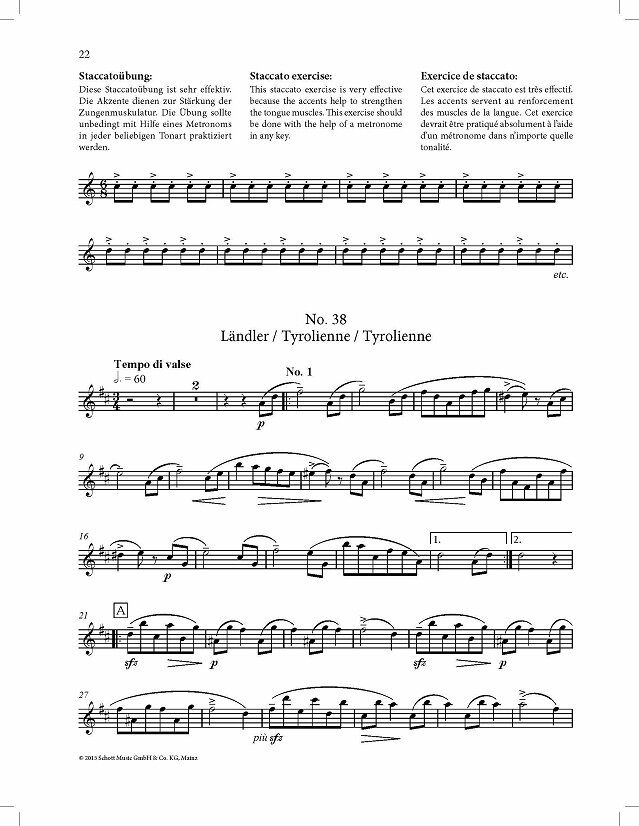
C2362: Baermann Method for Clarinet Op. 63 Volume 2 by Carl Baermann edited by Robert Erdt. Schott, 2015, SS, 83 pages. This volume includes Baermann studies 34-62 as well as additional material including fingering charts. Click on the cover image to view a sample page. C2363: Baermann Method for Clarinet Op. 63 Volume 2 + 2 CDs by Carl Baermann edited by Robert Erdt. Schott, 2015, SS, 83 pages + 2 CDs. In this edition the text is exactly the same as above but two CDs are included: One with complete performances of all the numbered exercises while the other has the piano accompaniment only. |
17.95
with CDs
32.95
|
|
C2371: Carl Baermann Clarinet Solos Volume 1 Piano Accompaniment from the Complete Celebrated Method for Clarinet Op. 63 edited by John Montgomery. Classical Collection Inc. 2015, SS, 38 pages. This book contains the piano accompaniment for the following studies from Op. 63: No. 14 (Romance), No. 15, No. 18, No. 19, No. 21 (Elegy), No. 22, No. 24, No, 25 (Variations), No. 27, and No. 28. |
9.95
|
|
C2372: Carl Baermann Clarinet Solos Volume 2 Piano Accompaniment from the Complete Celebrated Method for Clarinet Op. 63 edited by John Montgomery. Classical Collection Inc. 2015, SS, 51 pages. This book contains the piano accompaniment for the following studies from Op. 63: No. 31, No. 32 (Variations), No. 34, No. 35 (Polacca), No. 47, and No. 38 (Ländler). |
9.95
|
|
C2373: Carl Baermann Clarinet Solos Volume 3 Piano Accompaniment from the Complete Celebrated Method for Clarinet Op. 63 edited by John Montgomery. Classical Collection Inc. 2015, SS, 47 pages. This book contains the piano accompaniment for the following studies from Op. 63: No. 40, No. 41 (Tarantella), No. 43, No. 441 (Variations Sentimentales), No. 46, No. 47, No, 49, and No. 50 (Rondo). |
9.95
|

|
C107: Baermann Method for Clarinet Division 3 by Carl Baermann edited by Gustave Langenus. Carl Fischer, PB, 55 pages. Part three of the Baermann Method, Daily Studies, consisting primarily of scale and chord studies. |
21.95
|
|
C678: Baermann Method for Clarinet Part 3 by Carl Baermann edited by Harry Bettoney. Carl Fischer, 1938, SS, 55 pages. Part three of the Baermann Method, Daily Studies, consisting primarily of scale and chord studies. The primary difference between this edition and C107 is that this book includes fingering recommendations which may be very helpful or clutter the pages depending on your perspective. |
18.95
|
|
C2468: Carl Baermann's Celebrated Method for Clarinet Part 3 by Carl Baermann revised and edited by Jack Snavely. Kendor Music, 1989, SB, 115 pages. This is Jack Snavely's version of Part three of the Baermann Method, Daily Studies, consisting primarily of scale and chord studies. This book is more like David Hite's Foundation Studies (C131) than either of the editions above. Featuring scale, arpeggio, interval and pattern studies in all major and minor keys, this modern edition of the classic Baermann method reorganizes exercises according to key for a more logical study sequence. In addition, certain patterns and contemporary chordal studies have been added to make the material more complete, along with exercises in the keys of C-sharp and C-flat that were not originally included in Baermann's 19th-century opus. All music is digitally engraved for ease of reading, and the plastic binding ensures that the book stays open on a music stand. It also includes some suggested fingerings but they are only presented in the music once so the text is not cluttered. |
19.95
|
|
C157: Baermann Method for Clarinet Part 4 Op. 64 by Carl Baermann edited by Harry Bettoney. Carl Fischer, 1938, SS, 57 pages. Part four of the Baermann Method, Short Pieces. Twenty studies (many named) in seven keys with some emphasis on difficult fingerings. |
19.95
|
|
C158: Baermann Method for Clarinet Part 5 Op. 64 by Carl Baermann edited by Harry Bettoney. Carl Fischer, 1939, SS, 66 pages. Part five of the Baermann Method, Solos. Excerpts from the miscellaneous works of Baermann. Includes a fingering chart for Boehm and full Boehm clarinets. |
21.95
|
|
C143: Baermann for the Alto and Bass Clarinet adapted by William E. Rhoads. Southern Music Co., 1963, SS, 46 pages. This is an adaptation of Division 3 of Baermann Method. The editor has organized the exercises by key, adjusted the upper range (to high D), added fingering suggestions, and replaced the sixth and octave interval studies with one that exercises each interval in the scale from the second to the octave. |
19.95
|
|
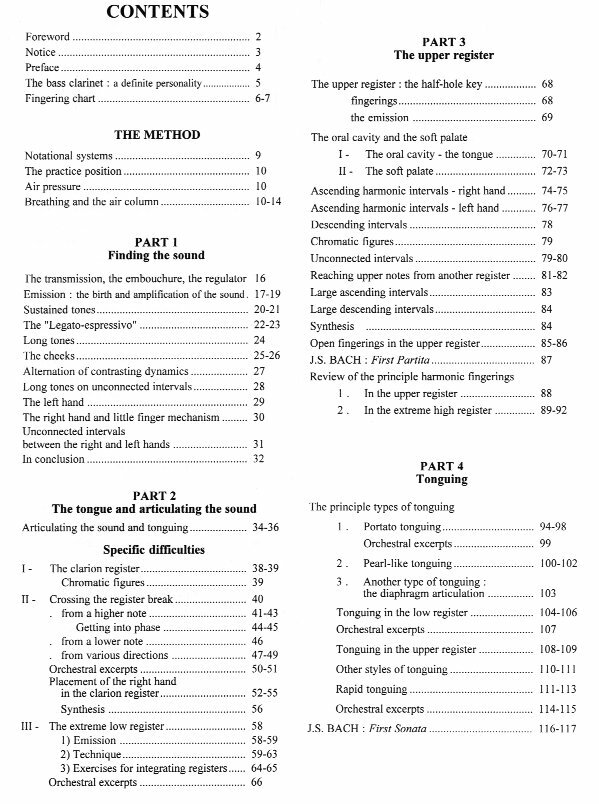
C633: The Bass Clarinet (Method) by Jean-Marc Volta. International Music Diffusion, 1996, PB, 119 pages. I am quite impressed by the French/English language method for the bass clarinet by Jean-Marc Volta, the principal bass clarinet of the French National Orchestra. This is an excellent source of detailed bass clarinet techniques and wonderful resource for fingerings. It would be suitable for high school age and up coming from the clarinet to the bass clarinet and for current bass clarinetists who are searching for more information on how to become proficient on their instrument. Click on the cover image to view the Table of Contents. Use your browser's Back button to return. |
49.95
|
|
C831: The Boosey Woodwind Method Clarinet, Book 1. Boosey & Hawkes, 2002, SS, 64 pages + CD. This book is typical of many recently published method books in that it is well illustrated and comes with a CD. While it is fairly slow moving in terms of range (book 1 goes to a G above the staff) it introduces a variety of time signatures (6/8. 5/4, etc.) and rhythmic patterns. The CD is a recording of most of the pieces in the book Includes quite a few duets and some trios. C832: The Boosey Woodwind Method Clarinet, Book 2. Boosey & Hawkes, 2002, SS, 56 pages + CD. Book 2 continues the range to C above the staff and adds sixteenth notes and more complex rhythms, meters and musical notations. The CD is a recording of most of the pieces in the book C833: The Boosey Woodwind Method Clarinet, Keyboard Accompaniment Book. Boosey & Hawkes, 2002, SS 119 pages. Keyboard accompaniment for the pieces in books 1 and 2. Includes chord symbols. |
Book 1
24.95 Book 2 25.95 Keyboard 39.95
|
|
 C2711: The Break by Paula Corley. Southern Music, 2019, SS, 28 pages. The subject of this book “Crossing the break,” can be a source of frustration for developing clarinetists. The Break is a logical guide for mastering this important step in clarinet performance. The method is divided into two parts: Part I contents: the clarinet overtone series – how new note names attach to previously learned fingerings; how to incorporate 'right hand down' as a developmental technique; one octave scales across the break; first melodies in the clarion register that teach basic musical concepts needed for advanced performance. Part II contents: studies from Rhythmical Articulation by Pasquale Bona, selected and edited for clarinet to prepare students for upper level performance. Rhythmical Articulation was originally written to assist singers with rhythmical and pitch accuracy. C2711: The Break by Paula Corley. Southern Music, 2019, SS, 28 pages. The subject of this book “Crossing the break,” can be a source of frustration for developing clarinetists. The Break is a logical guide for mastering this important step in clarinet performance. The method is divided into two parts: Part I contents: the clarinet overtone series – how new note names attach to previously learned fingerings; how to incorporate 'right hand down' as a developmental technique; one octave scales across the break; first melodies in the clarion register that teach basic musical concepts needed for advanced performance. Part II contents: studies from Rhythmical Articulation by Pasquale Bona, selected and edited for clarinet to prepare students for upper level performance. Rhythmical Articulation was originally written to assist singers with rhythmical and pitch accuracy. |
9.95
|
|
C579: The Clarinet, A Comprehensive Method by Frederick J. Thurston & Alan Frank. Boosey & Hawkes, 1979, PB, 167 pages. This is the third edition (revised and enlarged) that was prepared under the direction of Alan Frank and Thea King. While this isn't a method for starting most young beginners, it has a wealth of useful material for the intermediate student and excerpts that may be useful to more advanced players. Of note are complete scales, arpeggios and technical exercises in all keys (42 pages) and nearly 40 pages of orchestral excerpts which includes some pieces by Copland that aren't usually seen in excerpt books. |
54.95
|
|
C508: Clarinet for Beginners Book I Elementary by Avrahm Galper. Boosey & Hawkes, 1970, SS, 36 pages. This book is based on the study of the low register, basic technique, relatively small intervals, and the first principles of articulation. This book includes many fingering illustrations and introduces alternate fingerings. The second half of the book introduces the clarion register. There are "over the break" preparatory exercises and the break itself is approached from above. The cover of this book was previously orange. Note: the author wrote another method book set which we do not currently carry. |
12.95
|
|
C509: Clarinet for Beginners Book II Intermediate by Avrahm Galper. Boosey & Hawkes, 1976, SS, 40 pages. This is a continuation of book I. It emphasizes good sound and tone control, good intonation, technique and expression. It includes chalumeau, articulation and register change exercises, along with studies from Baermann, Lefebvre, Gambaro, Kroepsch, and others. Fingering recommendations are given throughout. This book stands on its own as a useful and inexpensive source of material for intermediate study. Clarinet Scales & Arpeggios is associated with this set of method books. |
15.95
|

|
C1788: Clarinet Full Range Fingering and Trill Chart by Richard Williams and Jeff King. Kjos, 1999, SS, 7 pages. This is a handy 6" x 9" fingering chart on glossy card stock. It gives the standard fingerings and alternatives from low E to altissimo C (the very high one). It also has trills beginning with low E to altissimo F-sharp. (Except other items with free shipping.) |
3.95
|
|
C635: Clarinet Staccato from the Beginning by Reginald Kell. Boosey & Hawkes, 1968, SS, 46 pages. Many, many staccato exercises, of varying difficulty. Quite a few are in the form of duets. |
27.95
|
|
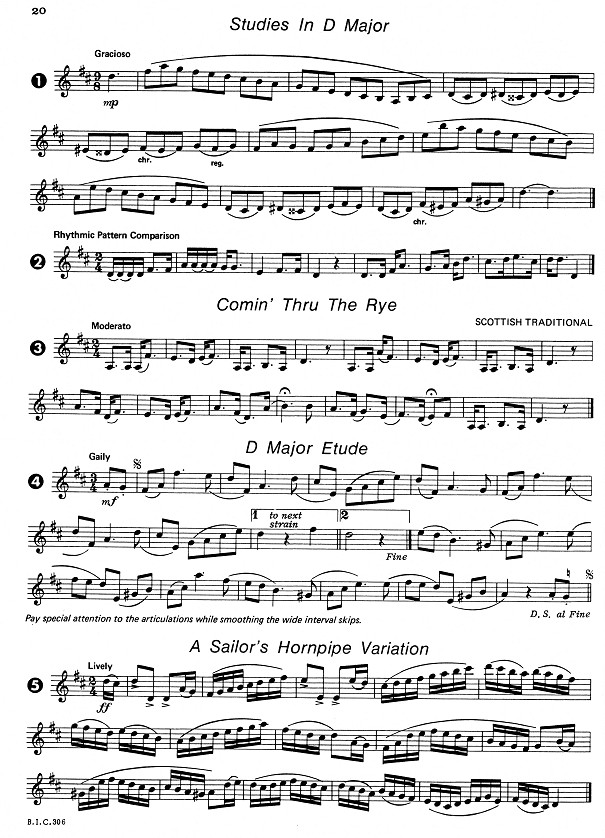
C2459: Clarinet Student Level One by Fred Weber in collaboration with Robert Lowry. Alfred, 1969, SS, 40 pages. This book at the elementary level is labeled a method for individual instruction but it can also be used along with other books at the same level as a band method. It includes a fingering chart, instruction on reading music, scales, and 32 lessons in simple keys. Click on the cover image to view a sample page. |
7.95
|
|
C2460: Clarinet Student Level Two by Fred Weber in collaboration with Robert Lowry. Alfred, 1970, SS, 48 pages. This book at the intermediate level is labeled a method for individual instruction but it can also be usedalong with other books at the same level as a band method. It includes a fingering chart, daily warm-ups, scales and pieces in those keys through 3 sharps and 4 flats, alternate fingerings, and other exercises. Click on the cover image to view a sample page. |
7.95
|
|
C2461: Clarinet Student Level Three by Robert Lowry in collaboration with James D. Ployhar. Alfred, 1971, SS, 40 pages. This book at the advanced intermediate level is labeled a method for individual instruction but it can also be used along with other books at the same level as a band method. It includes a fingering chart, trill fingerings, musical notation and time signatures, grace notes, mordants, trills, turns, more scales and studies (including minor keys). Click on the cover image to view a sample page. |
7.95
|
|
C102: Complete Jazz Clarinet Book by William Bay. Mel Bay Publications, PB, 144 pages. A comprehensive study text for students beginning a serious study of jazz. The first part of the book begins by teaching elements of jazz phrasing, articulation, vibrato and interpretation of rhythms through exercises and original pieces. Next, the book encourages improvisational skills through both theoretical and technical studies of scales and chords. The second half of the book builds on the skills learned in the first part with an in-depth study of the theory, which underlies improvisational techniques including scales, modal concepts and chord construction. Ear training, particularly the development of the ability to hear chord progressions is also emphasized. Click on the cover image to view Table of Contents which is in .pdf (Adobe Acrobat) format. Use your browser's Back button to return. |
19.95
|
|
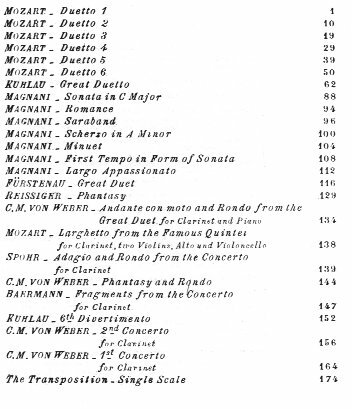
C183: Complete Method for Clarinet Vol. 1 (Méthode Complète de Clarinette) by Aurelio Magnani. Alphonse Leduc, 1946, PB, 141 pages (page size 10.5 x 16 inches). This method by Italian clarinetist Magnani (1856-1921) received the Spanish International Gold Medal in 1900. Full of useful exercises many of which have a second part. Text is in French, Italian, English and Spanish. C184: Complete Method for Clarinet Vol. 2 (Méthode Complète de Clarinette) by Aurelio Magnani. Alphonse Leduc, 1948, PB, 177 pages (page size 10.5 x 16 inches). This book is about two thirds duets (primarily Mozart and the author) with the rest being famous clarinet works. Click on the cover image to view the Table of Contents for Vol. 2. Use your browser's Back button to return. |
Vol. 1
33.95
Vol. 2 |
|
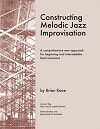
 G244: Constructing Melodic Jazz Improvisation (B-flat Edition - Tenor Sax/Clarinet/Trumpet) by Brian Kane. Jazz Path Music Publishing, 2007, PB, 160 pages + CD. This book contains detailed explanations and analysis of the creative and improvisational techniques musicians use for style, phrasing, solo development, and motivic improvisation in an easy to follow step-by-step format. Ten progressively difficult chapters, containing dozens of improvisational exercises, explore jazz improvisation from creative, melodic and technical perspectives. The book is designed to meet all of the national standards and frameworks for music education and is a comprehensive improvisational curriculum for both individuals and classes. The book includes a 52 track play-a-long and demonstration CD. Click on the cover image to view the Table of Contents. G244: Constructing Melodic Jazz Improvisation (B-flat Edition - Tenor Sax/Clarinet/Trumpet) by Brian Kane. Jazz Path Music Publishing, 2007, PB, 160 pages + CD. This book contains detailed explanations and analysis of the creative and improvisational techniques musicians use for style, phrasing, solo development, and motivic improvisation in an easy to follow step-by-step format. Ten progressively difficult chapters, containing dozens of improvisational exercises, explore jazz improvisation from creative, melodic and technical perspectives. The book is designed to meet all of the national standards and frameworks for music education and is a comprehensive improvisational curriculum for both individuals and classes. The book includes a 52 track play-a-long and demonstration CD. Click on the cover image to view the Table of Contents. |
24.95
|

|
C786: Fingering Chart for Clarinet by Jean-Marc Volta. International Music Diffusion, 1992, 2 pages. A good selection of altissimo fingerings up to high C.
(Except other items with free shipping.) |
9.95
|
|
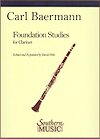
C131: Foundation Studies for Clarinet (Baermann Book 3) expanded and edited by David Hite. Southern Music Co., SS, 96 pages. David Hite has arranged the scales, arpeggios, and exercises in the Carl Baermann Method for Clarinet Book 3 in order of keys. He has also included some suggested fingerings and additional material. |
15.95
|
|
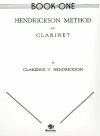
C473: Hendrickson Method for Clarinet Book One by Clarence V. Hendrickson. Belwin, 1941, SS, 48 pages. A local clarinet teacher suggested we carry this method. It is progressive, taking the student through the basics and to keys of three flats and sharps. Includes a fingering chart. A good value. C474: Hendrickson Method for Clarinet Book Two by Clarence V. Hendrickson. Belwin, 1942, SS, 52 pages. Includes minor keys, scales and scale exercises (similar to Baermann Book 3), etudes and duets. Additional keys are introduced at the end of the book, but the primary focus here is building technique with progressive studies. |
Book 1
8.95
Book 2 |

|
C1698: I Used to Play Clarinet by Larry Clark. Carl Fischer, 2011, SS, 48 pages + CD. I Used to Play is a new series for adults looking to get back into playing their instruments of yesteryear, and will help jump start their memory and comfort with music. Its #1 goal is to get people re-acquainted with their instrument(s) by not only reviewing theory and technique with etudes, but also providing them with types of music they want to play, like pop, jazz, and classical tunes. Each book contains a CD with audio MP3 files of complete performances of most songs, plus accompaniment-only play along versions. The CD also contains printable PDFs of piano parts for practice or performance opportunities. (The CD will only work in computers and CD players that play MP3s). It's just the push former players need to fall back in love with their instruments again! Once you have I suggest another scale book like Baermann Book 3 or similar that exercises the full range of the clarinet. |
19.95
|
|
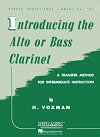
C1955: Introducing the Alto or Bass Clarinet by Himie Voxman. Rubank, 1952, SS, 44 pages. This book is similar to the Rubank intermediate methods and is subtitled "A Transfer Method for Intermediate Instructions." It is intended for students who started on the soprano clarinet and are now learning the alto or bass clarinet. It introduces many techniques and concepts such as expression markings and accents, various types of articulation, grace notes, trills, scale and chord studies. A somewhat outdated fingering chart is included. |
6.95
|

|
C1013: The Jazz Method for Clarinet (Volume 1) by John O'Neill. Schott, 1993, PB, 96 pages plus CD. This method provides a complete course for players of all ages, guiding students from their first note. Each book is accompanied by high quality rhythm section tracks recorded on compact disc. Right from the start, students can enjoy authentic jazz sounds, playing in the company of professionals. With step-by-step instruction and a progression of specially written pieces, the fundamental elements of good technique are introduced alongside the rhythmic subtleties of jazz. Improvisation is encouraged from an early stage and is given direction through the systematic study of scales and arpeggios and advice on ear-training and chord patterns. With supplementary suggestions for listening and reading, and an Appendix containing all the chord progressions for “live” accompaniment of the tunes, they are ideally suited to both students working alone and those learning with a teacher. The text is in English, French, and German. C1014: The Jazz Method for Clarinet Volume 2 Developing Jazz Technique for Clarinet by John O'Neill. Schott, 2007, PB, 88 pages plus CD. Following on from the best-selling Jazz Method for Clarinet, Developing Jazz Technique for Clarinet will help the intermediate player take their jazz skills to a new level. The pieces are written in a variety of styles, including blues, swing, New Orleans, ragtime, jazz waltz, bossa nova, samba, salsa, calypso, reggae and South African. Particular emphasis is given to helping the student improvise over chord sequences. Includes accompaniment CD with rhythm section. The text is in English, French, and German. |
Volume 1
32.95
Volume 2 |

|
C171: Klarinetten-Schule Vol. 1A by Rudolf Jettel. Doblinger, 1949, SS, 48 pages. Part A of the first book in the trilingual (German, English, French) School for Clarinet method series by the long-time Vienna Philharmonic clarinetist. Contains a detailed introduction to musical concepts, exercises for beginners (doesn't move too fast), and a German system clarinet fingering chart.klose |
28.95
|
|
C172: Klarinetten-Schule Vol. 1B by Rudolf Jettel. Doblinger, 1949, SS, 48 pages. Part B of the first book in the School for Clarinet continues with a few basic concepts (trills, turns, mordents, etc.) left over from part A. Most of the book, however, is exercises of greater difficulty and in more extended key signatures. |
28.95
|
|
C173: Klarinetten-Schule Vol. 2 by Rudolf Jettel. Doblinger, 1950, PB, 85 pages. This book is primarily scale studies in all keys. Similar to Baermann Vol. 3, but with more emphasis on minor scales, both harmonic and melodic. It also includes exercises based on chromatic scales and intervals. |
29.95
|
|
C174: Klarinetten-Schule Vol. 3 by Rudolf Jettel. Doblinger, 1950, PB, SS, 44 pages. This book contains 28 relatively advanced studies (etudes), some of which are exercise-like while others have more musical variety. The book concludes with a chromatic scale with long-held notes for the clarinet over a very busy piano accompaniment. |
25.95
|
|
C145: Klosé Celebrated Method for Clarinet (Complete Edition) by Hyacinthe Klosé, revised and enlarged by Simeon Bellison edited by Stanley and Naomi Drucker. Carl Fischer, 1946/2015, PB, 350 pages. A new edition of this method book which is probably the best known and most popular clarinet method. It has been completely reorganized. Highlights of this edition include: Addition of Rose Etude excerpts, expansion of Kroepsch Studies, a new layout affording easier reading, and complete Grand Duets for study and performance. Click on the cover image to view the Table of Contents. Because of the weight of this book, Media Mail shipping charges will be based on the actual cost of postage. C145a: Klosé Celebrated Method for Clarinet (Complete Edition) by Hyacinthe Klosé, revised and enlarged by Simeon Bellison edited by Stanley and Naomi Drucker. Carl Fischer, 1946/2016, SB, 350 pages. This is the new spiral bound edition of this work that will lie flat on a music stand. Click on the cover image to view the Table of Contents. Because of the weight of this book, Media Mail shipping charges will be based on the actual cost of postage. |
C145 34.95
C145a
43.95
|
|
C115: Langenus Complete Method Part I by Gustave Langenus. Carl Fischer, PB, 88 pages. Includes fingering chart.
C116: Langenus Complete Method Part II by Gustave Langenus. Carl Fischer, SS, 85 pages. C117: Langenus Complete Method Part III, Virtuoso Studies and Duos by Gustave Langenus. Carl Fischer, PB, 118 pages. |
Part I
24.95 Part II 24.95 Part III 26.95
|
|
C118: Lazarus Method for Clarinet Part I by Henry Lazarus revised by Simeon Bellison. Carl Fischer, PB, 139 pages. One of the famous clarinet methods. The beginning portion of the book includes The Rudiments of Music, a full fingering chart for the Boehm clarinet and, surprisingly, a table of trills for the Albert system clarinet. This book contains many duets and other pieces of music and less exercises than some other methods. |
26.95
|

|
C119: Lazarus Method for Clarinet Part II by Henry Lazarus revised by Simeon Bellison. Carl Fischer, PB, 134 pages. Continuation of Part I. Includes the 24 Albert scale studies, the first 167 Kroepsch exercises, duets, 30 etudes by Muller and more exercises by Lazarus. |
28.95
|
|
C120: Lazarus Method for Clarinet Part III by Henry Lazarus revised by Simeon Bellison. Carl Fischer, PB, 158 pages. The concluding volume of the Lazarus Method. Includes Three Intermediate Duets (Lazarus), 25 Studies for Advanced Pupils (Lazarus), 15 Melodious Studies (Lazarus), Three Operatic Duets (Lazarus), Morceau de Salon (Kalliwoda), Fantasie from the Opera "Der Freischütz" by Weber (Kroepsch). Air Varié (Rode), Intermezzo from the Opera "Tsar's Bride" (Rimsky-Korsakoff/Bellison), Cujus Animam from Stabat Mater by Rossini (Liverani), Concert Fantasia on Motives from Bellini's Opera "La Sonnambula" (Cavallini), and Concert Fantasia on Rigoletto (Bassi). |
28.95
|
|
DVD010: Learn to Play Klezmer Music - Improvising in the Tradition (DVD) taught by Andy Statman. Homespun Tapes, 2006 (DVD edition), NTSC, 80 minutes, includes small booklet of music. Andy Statman discusses the background, techniques and stylistic nuances needed to perform klezmer correctly – regardless of the instrument you play. Andy teaches typical klezmer tunes, playing each one slowly and unornamented, then demonstrating how trills, slurs, grace notes, vibrato and other variations “bring out the heart that's inside the melody.” You'll learn connecting runs, classic endings, “dangerous” ornaments to avoid, and the rhythmic underpinning of this vital music. Andy then performs each tune on clarinet, accompanied by Zev Zions on accordion. Songs: Purim niggun, Moshe Emes (Breslev niggun), Meron niggun, and The Old Sher. |
29.95
|
| C1008: Méthode Progressive et Complète for Clarinet Vol. 1 by Eugène Gay. Billaudot, 1932, PB, 155 pages (large format). Part one of this method includes many exercises, etudes, duets, etc. in keys to one sharp or flat. The text is entirely in French. C1009: Méthode Progressive et Complète for Clarinet Vol. 2 by Eugène Gay. Billaudot, 1932, PB, 160 pages (large format). Part two continues the method in the rest of the keys and also includes music from Bach, Mozart, Weber, and other composers. The text is entirely in French. |
Vol. 1 Vol. 239.95 42.95
|
|
|
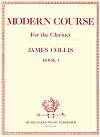
Unfortunately, the publisher of these books is letting them go out of print. We still have books 1-3 and book 6. C219: Modern Course for the Clarinet Book 1 by James Collis. Henri Elkan Music Publisher, 1973, SS, 33 pages. This method moves along at good pace with a range to high C, keys of one sharp and flat, and pieces with some 16th notes by the end. Features many short pieces rather than exercises. C220: Modern Course for the Clarinet Book 2 by James Collis. Henri Elkan Music Publisher, 1960, SS, 32 pages. Introduces remaining notes needed for chromatic scale, alternate fingerings. more complex rhythms, minor scales, staccato. C221: Modern Course for the Clarinet Book 3 by James Collis. Henri Elkan Music Publisher, 1963, SS, 48 pages. Continues articulation studies, introduces major and minor keys with 2 and 3 sharps or flats. |
Book 1
14.95 Book 2 14.95 Book 3 14.95
|
|
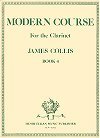
C224: Modern Course for the Clarinet Book 6 by James Collis. Henri Elkan Music Publisher, 1972, SS, 48 pages. More etudes by Klose, Ferling, Hinke, the author and others. |
Book 6
14.95
|
|
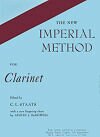
C706: The New Imperial Method for Clarinet by C.L. Staats. Theodore Presser Co., 1960, PB, 101 pages. A popular one volume method that includes etudes used in some areas for high school level auditions. |
21.95
|
|
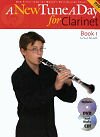
C639: A New Tune a Day for Clarinet DVD Edition by Ned Bennett. Boston Music Co., 2006, PB, 64 pages plus CD and DVD. A New Tune A Day features the same logical, gentle pace and keen attention to detail that made earlier editions so hugely popular and successful. Clear explanatory diagrams and photographs help guide the student through the lessons and achieve the very best in tone, technique and posture. The selection of music is fresh and exciting, including duets and rounds to inspire the student and ensure that those vital practice hours are never boring. The accompanying audio CD features a virtuoso performance and backing track for each pieces, as well as recorded examples to support the lessons. The DVD features lessons on: basic techniques, putting the instrument together, posture, looking after the instrument, basic music notation, and how to approach the first piece. |
17.95
|
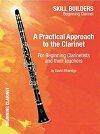 |
The following three books are not traditional method books, but they will be very helpful in the study of the clarinet. C1247: A Practical Approach to the Clarinet For Beginning Clarinetists and their Teachers by David Etheridge. Woodwind Educators Press, 2008, SS, 38 pages. This book for beginners includes lots of helpful diagrams, photos, and musical exercises. The topics covered include assembling the clarinet, getting a great tone from the beginning, fingerings for all notes from low E to C above the staff, articulation, notes for the little fingers, control of the register change, playing beautiful high notes and daily drills. |
13.95
|
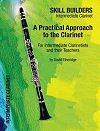 |
C1248: A Practical Approach to the Clarinet For Intermediate Clarinetists and their Teachers by David Etheridge. Woodwind Educators Press, 2008, SS, 48 pages. The intermediate book continues this series with more detailed looks at some subjects touched on in the beginning book. The topics covered include breathing and posture, breath control and support, embouchure, voicing the tone, articulation, left hand position and the register change, right hand position and alternate fingerings, and altissimo notes to high G. Many diagrams, photos and musical exercises are included. |
15.95
|
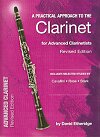 |
C1249: A Practical Approach to the Clarinet For Advanced Clarinetists, Revised Edition by David Etheridge. Woodwind Educators Press, 2009, SB, 148 pages. The purpose of this advanced book is to provide a number of ways to approach each of the fundamental aspects of clarinet playing and to provide the tools to learn music of all levels of difficulty. The first four skills: breathing & posture, breath control & support, embouchure, and voicing create a beautiful clarinet tone. Other topics covered are: articulation, hand position, subdivision, throat tones, high notes, upward and downward skips, legato finger motion, and rinforzando attacks. This book adds an extensive array of etudes (mostly from Rose) for practicing the techniques. A short bibliography of suggested material is also included. This is the revised edition of this book. It is 66 pages longer than the original version. |
39.95
|
|
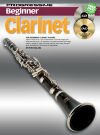
C601: Progressive Beginner Clarinet by Peter Gelling. LPT Publishing, 2001, SS, 72 pages + CD and DVD. This is a very well illustrated, slow moving method (all in the lower register) that should be excellent for absolute beginners. Includes fingering charts, clarinet basics, and some elementary music theory. The DVD shows a clarinet being played, the music, and the fingerings on screen at the same time. The playing is in a more or less "pop" style. |
19.95
|
|
C602: Progressive Clarinet by Peter Gelling. LPT Publishing, 2004, SS, 96 pages + CD. This book is similar to the previous one, but moves faster and covers more ground. Musical examples are taken from classical, pop, blues, and jazz sources. The publisher describes it as, "A Comprehensive, lesson by lesson method, covering all aspects of clarinet playing for the beginning student." |
19.95
|
|
C236: Rubank Elementary Method Clarinet by N. W. Hovey. Rubank, 1933, SS, 48 pages. Famous beginning method for individual or like-instrument class instruction. Includes fingering charts for Boehm and Albert system clarinets. |
7.95
|
|
C237: Rubank Intermediate Method Clarinet by J.E. Skornicka and Robert Miller. Rubank, 1936, SS, 52 pages. A follow up course for individual or like-instrument class instruction. Introduces many techniques and concepts such as expression markings and accents, various types of articulation, grace notes, trills, scale and chord studies. A number of duets and trios are included. Fingering chart for Boehm clarinets. |
7.95
|
|
C238: Rubank Advanced Method Clarinet Vol. 1 by Wm. Gower and H. Voxman. Rubank, 1949, SS, 72 pages. This book is intended to follow any beginning or intermediate method. It includes scales and chords studies, studies in melodic interpretation (all duets), studies in articulation, fingering exercises, and ornamentation. All of the material in this books is in keys with no more than two sharps or flats. Fingering chart for Boehm clarinets. |
9.95
|
|
C239: Rubank Advanced Method Clarinet Vol. 2 by Wm. Gower and H. Voxman. Rubank, 1953, SS, 80 pages. This book covers similar material to volume 1 of the Advanced Method but in keys from three to five sharps and flats. Fingering chart for Boehm clarinets. |
9.95
|
|
C2700: So You Want to Play the Clarinet by Paula Corley. Southern Music, 2019, SB, 40 pages. This is a new edition of So You Want to Play the Clarinet from Southern Music. It is mostly the same as the older edition below except it ends prior to the upper register portion. It emphasizes good tone quality and phrasing. The range is moderate, from the lowest E to third line B-flat. Rhythms and basic techniques needed for first semester performance are included. For the best result, follow the lessons in order. With regular practice, you can teach yourself to play. Visit clarinetcity.com to find articles, videos, and helpful information that is free to download. Click on the cover image to view some sample pages. |
14.95
|
|
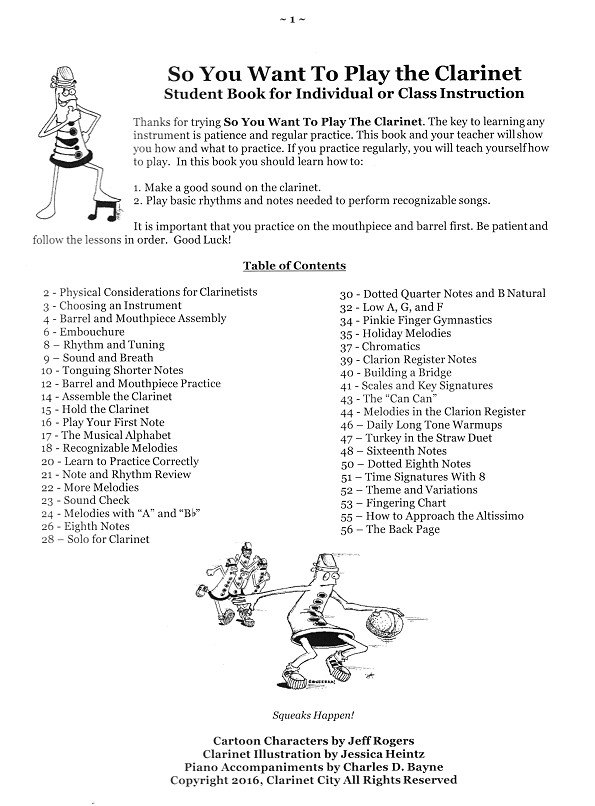
C1771: So You Want to Play the Clarinet (2016 Edition) by Paula Corley. Clarinet City, 2016, SB, 56 pages. This is an easy-to-understand book filled with photos, large print fingering examples, and lots of basic melodies suitable for learners of all ages. “Sequencing” is logical and pacing is moderate. The book starts with "physical considerations for clarinetists" and ends with how to play up to altissimo F. The goal of the book is to learn to make a good sound on the clarinet and to play basic rhythms and notes need to perform recognizable songs. I still have 2 copies of this edition. When I contacted the author she was not sure if it would stay in print. Click on the cover image to view the table of contents. |
18.95
|

|
C1771a: So You Want to Play the Clarinet - Teacher Edition by Paula Corley. Clarinet City, 2016, SB, 68 pages. This book contains all of So You Want to Play the Clarinet as well as additional material intended for the teacher. The titles of these pages have been highlighted on the table of contents by being printed in bold italic type. One copy is still on hand, Click on the cover image to view the table of contents. |
20.95
|
|
C240: Upbeat Scales & Arpeggios by Avrahm Galper. Mel Bay, 2004, SS, 72 pages. The scales in this book are based on the Baermann scale studies in Book 3 of the Baermann Method. The scales and arpeggios are arranged by key. The author starts each scale on the upbeat for impetus and melodic direction. Of particular value are the suggested fingerings for many notes, especially in the altissimo. |
19.95
|
Bindings: HB: Hard Bound, PB: Perfect Bound (paperback with square spine), SS: Saddle Stitch (paper, folded and stapled), SB: Spiral Bound (plastic or metal)
