
Member - International Clarinet Association

Clarinet Books


This page is in alphabetical order by title. Books marked "New!" in gold type are new publications. Books marked "New!" in teal type are new to our stock.
Clarinet Books
|
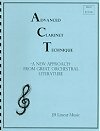
C089: Advanced Clarinet Technique - A New Approach from Great Orchestral Literature by John Gibson. JB Linear Music, 2003, SB, 59 pages. This new book uses passages from Mozart, Borodin, Brahms and other great composers to build advanced technique. They are also more than orchestral excerpt studies because they include the full musical context of the selection. The complete Marriage of Figaro Overture by Mozart is included as a bonus. A great value. |
11.95

|
|
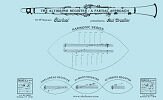
C001: The Altissimo Register: A Partial Approach by Paul Drushler. SHALL-u-mo Publications, SB, 30 pages (8 1/2 x 14 inches). The author's premise is that the best choices for specific fingerings for certain passages can usually be determined with a knowledge of partials. Diagrams and comments on altissimo fingerings using the fifth partial and above. |
24.95
|
|
C058: The Art of Clarinet Playing by Keith Stein. Summy-Birchard, PB, 80 pages. A highly regarded introduction to the technical aspects of clarinet playing from a former instructor at Michigan State University. Subjects covered include mouthpiece and ligature, the reed, the clarinet, embouchure, relaxation, breathing and support, voicing, release and tonguing, hand and fingers, tone quality, intonation, high-register playing, phrasing and interpretation, etc. The book also list some suggested literature and concludes with several etudes. |
18.95
|
|
C059: El Arte de Tocar el Clarinete by Keith Stein. Summy-Birchard, PB, 80 pages. Spanish language translation of the Art of Clarinet Playing. |
17.95
|
|
C2385: Articulation Development for Clarinetists by Larry Guy. Rivernote Press, 2016/2018, SB, 113 pages + CD. This is an extensive textbook by Larry Guy covering all aspects of clarinet articulation. It includes Building the Foundation: Air Stream and Embouchure, The Attack, The Short Staccato, Benefits of Short Note Study, The Variety of Articulated Style, Developing the Quality of Articulated Sound, The Norm and Variance from It, Reed and Mouthpiece Considerations, Exercises to Develop Articulation Stability and Endurance, Acquiring Speed with Accuracy, Famous Articulated Passages and Suggestions to Air in the Mastery of Them, Multiple Tonguing: Double and Triple Tonguing, and Harold Wright Articulation Warmups. Includes demonstration CD. Click on the cover image to view the complete Table of Contents. |
39.95
|

|
C156: The Baroque Clarinet by Albert R. Rice. Oxford University Press, 1992, PB, 197 pages. The Baroque Clarinet is a sourcebook for the historical study of the clarinet during the first half of the eighteenth century. The book is based on a comprehensive study of the theoretical, musical, and iconographical evidence, and many conclusions are presented here for the first time. The long awaited paperback edition of this book. |
77.95
|
|
C1756: The Bass Clarinet, A Personal History by Harry Sparnaay. Periferia Music, 2011, PB, 258 pages + CD. This is the second edition altough I don't see any obvious differences. Harry Sparnaay (1944-) is a well-known Dutch bass clarinetist. This book is both personal and comprehensive covering a wide range of the author's personal experiences and technical aspects of bass clarinet playing. There are many examples and resources for the player to draw on including multiphonic and microtonal fingerings and long list of recent repertoire. The CD has more than 100 audio examples of multiphonics and other special effects. Because of the weight of this book, Media Mail shipping charges will be based on the actual cost of postage. Click on the cover image to view a .pdf file of the book's Table of Contents and another 16 sample pages. This book is not currently available from us. There is now a downloadable edition of this book available here (not from us). | |
|
C002: The Basset-Horn & its Music by John P. Newhill. Rosewood Publications, 2020, SB, 129 pages. A very interesting book on an instrument that because of the work of the author and others with similar interests is no longer as neglected as it once was. Chapters include What is a Basset-Horn?, The Name, The Rise & Fall of the Basset-Horn, The Modern Basset-Horn, The Repertoire (Solo Works with Orchestra, Chamber Works, Orchestral Works, List of Recordings, List of Publishers, Addresses for Manuscript Works, Index of Composers), and a bibliography. This is a new edition printed on A4 paper. |
46.95
|
 |
C679: A Book for the Clarinet Reed-Maker by Ronald V. Vazquez. 1993, PB, 90. pages. Subtitled: An Illustrated Single Reed-Making Manual. This book shows you how to make your own reeds, where to get supplies, and--best of all--how to make reeds in less than half the time it would take you to make them entirely by hand. In addition, once you know how to make your own reeds, you will be able to adjust commercial reeds. This book is not currently available. |
|
|
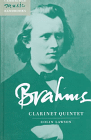
C004: Brahms: The Clarinet Quintet (Cambridge Music Handbooks) by Colin Lawson. Cambridge University Press, PB, 124 pages. A very interesting book which examines the technical aspects of the quintet and places it in the context of the times. Chapters include: The nineteenth-century clarinet and its music, Brahms and the orchestral clarinet, Brahm's chamber music before 1891, The genesis and reception of the Clarinet Quintet, Design and structure, Performance practice, The legacy of Brahm's clarinet music. |
42.95
|
| C005: Brahms: The Clarinet Quintet (Cambridge Music Handbooks) by Colin Lawson. Cambridge University Press, HB, 124 pages. (List price is now $65.00.) |
44.95
|
|
|
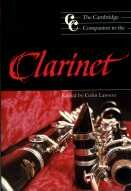
C006: The Cambridge Companion to the Clarinet edited by Colin Lawson. Cambridge University Press, 1995, PB, 240 pages. Highly recommended. Main sections include single reeds before 1750 (Colin Lawson), the development of the clarinet (Nicholas Shackleton), the clarinet family (five chapters), the development of the clarinet repertoire (Jo Rees-Davies), players and composers (Pamela Weston), the mechanics of playing the clarinet (Antony Pay), teaching the clarinet (Paul Harris), playing historical clarinets (Colin Lawson), the professional clarinetist (Nicholas Cox), the contemporary clarinet (Roger Heaton), the clarinet in jazz (John Robert Brown), the clarinet on record (Michael Bryant), plus a useful list of tutors and studies and a bibliography. Should be in every clarinetist's library. |
32.95
|
|
C1773: Care and Feeding of Your Clarinet, A User's Guide to Basic Maintenance by Heather Karlsson. H. Karlsson Woodwinds, 2008, SB, 96 pages. This is not a repair book, but it does provide guidance and instruction for the kinds of basic troubleshooting and preventative maintenance that the clarinetist can perform. Learn about such topics as the consequences of neglect on the mouthpiece and body of the clarinet, how to maintain the clarinet mechanism and keep repair costs to a minimum, how to take care of the wood of the clarinet, and the basics of reed and mouthpiece mechanics. |
24.95
|
|
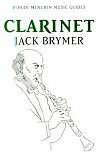
C033: Clarinet by Jack Brymer. Kahn & Averill, London, PB, 259 pages. The book which was originally published in the late 1970s is now available again in the US. Chapters include: The Clarinet Today, History and Development, Acoustic Characteristics, The Practical Clarinettist, The Artistic Approach, and Teaching the Clarinet. The book also includes a number of photos and other illustrations. |
24.95
|

|
C1048: The Clarinet by Eric Hoeprich. Yale University Press, 2008, HB, 415 pages. Eric Hoeprich, a performer, teacher, and expert on historical clarinets, explores its development, repertoire, and performance history. Looking at the antecedents of the clarinet, as well as such related instruments as the chalumeau, basset horn, and bass clarinet, Hoeprich explains the use and development of the instrument in the Baroque age. The period from the late 1700s to Beethoven's early years is shown to have fostered ever wider distribution and use of the instrument, and a repertoire of increasing richness. The first half of the nineteenth century, a golden age for the clarinet, brought innovation in construction and great virtuosity in performance, while the following century and a half produced a surge in new works from many composers. The author also devotes a chapter to the role of the clarinet in bands, folk music, and jazz. At the end for the book are lists of instrument makers and clarinet methods published before 1900, extensive notes, and an excellent index. Sadly, this book is now out of print. | |

|
C011: Clarinet and Clarinet Playing by David Pino. Dover Publications, PB, 320 pages. The author, Professor of Clarinet at Texas State University, studied with Keith Stein at Michigan State University, starting at the age of eight, for fifteen years. He graduated from Michigan State University with a Bachelor's degree in Theory and Composition, then earned a Master's degree in Woodwind Performance, and later, a Doctorate in Clarinet Performance. The book covers the technical aspects of clarinet playing, musicianship, teaching the clarinet, and reeds. It also includes significant chapters on clarinet history and literature. |
15.95
|

|
C1036: The Clarinet in the Classical Period by Albert R. Rice. Oxford University Press, 2003/2008, PB, 316 pages. The author of The Baroque Clarinet (see above) presents a comprehensive study of the clarinet through the classical period, from 1760 to 1830. During the early part of this period the clarinet was transformed from a typically baroque instrument to an essential piece of the classical ensemble. Barely a half century later, in 1812, Ivan Müller developed the thirteen-keyed clarinet, which brought the instrument into the romantic age. In addition to the history, this book includes chapters on playing techniques, music for the classical clarinet, the clarinet in performing groups as well as extensive notes, a detailed bibliography, and an index of classical clarinet makers. Note: Al Rice has informed me that this paperback edition includes some corrections. |
55.95
|

|
C012: The Clarinet Concerto in Outline by Norman M. Heim. Van Cott Information Services, 2007, SB, 77 pages. This most recent of Professor Heim's surveys of the clarinet literature was originally published in 1997. Each concerto is described in a detailed outline format. Chapters include: Early Period, Classic Period - Mozartian Era, The Romantic Period, and Contemporary Period. The publisher of each concerto is identified and there is an index by composer. This edition has been completely reset in an easy to read typeface and we have added information on many of the composers. This book is not currently available. |
24.95
|

|
C052: The Clarinet Doctor by Howard Klug. Woodwindiana, Inc., SB, 117 pages. The author, Professor of Music at Indiana University, is particularly well know as a teacher of clarinet instruction techniques. This book is in two parts Part 1 (Klug's Clarinet Calisthenics) includes the Indiana University Clarinet Curriculum as well as many exercises. Part 2, (The Clarinet Doctor) covers many subjects including Embouchure, Breathing, Body Posture, Tongue and Throat, Reeds, Squeaks, Bass Clarinet, Auditions, etc. Click on the book to see the full table of contents. |
39.95
|
|
C014: Clarinet Fingerings (also known as 303 Clarinet Fingerings and 276 Trills) by Alan Sim. Queen's Temple Publications, 1991, SB, 56 pages. Covers the range of the clarinet up to triple high G. Fingerings include notations of the drawbacks of certain fingerings. Includes both half tone and whole tone trills. Handy pocket size. Click on the book to see a sample page.
(Except other items with free shipping.) |
9.95
|

|
C015: Clarinet Fingerings by Thomas Ridenour. SB, 51 pages. The sixth printing of this popular book. The focus is on fingerings for the altissimo notes with up to 24 alternate fingerings for each note. However, the strength of this book is that it is not just diagrams of fingerings but includes the advantages and shortcomings of each choice and suggests repertoire for which they are appropriate. |
21.95
|
|
C1307: Clarinet Fundamentals 1: Sound and Articulation by Reiner Wehle. Schott, 2008, PB, 128 pages. This book is part of a new series by Reiner Wehle, professor at the Music Academy of Lübeck, member of Trio di Clarone, and husband of Sabine Meyer. Includes sections devoted to practicing, breathing and posture, legato exercises, sound exercises, articulation, clarinet reeds and recommended reading. This book is in English and German and covers both the Boehm and Oehler system instruments. |
28.95
|
|
C1308: Clarinet Fundamentals 2: Systematic Fingering Course by Reiner Wehle. Schott, 2008, PB, 136 pages. The second book in this series by Reiner Wehle. It does not include a fingering chart but is a comprehensive course made up of short exercises and examples from the literature emphasizing various notes and fingering combination. It includes examples from the Mozart clarinet concerto for basset clarinet. In English and German and covering all fingering problems in great detail for the Boehm and Oehler systems. |
28.95
|
|
C1309: Clarinet Fundamentals 3: Intonation by Reiner Wehle. Schott, 2008, PB, 112 pages. This book explains both the theory and practice of intonation (in English and German) and has many intonation exercises in duet form with a few as trios. This is followed by 29 pages of examples from the orchestral repertoire of (mostly) two clarinets playing in harmony, octaves, and unison. |
28.95
|

|
C061: The Clarinetist's Guide to Klezmer by Tom Puwalski, SB, 75 pages. This is a how to book for Clarinetists who want to learn how to perform "traditional" Klezmer. It includes 16 transcriptions of the recordings of Dave Tarras and Naftule Brandwein. Contents include: What is Traditional Klezmer?, Types of Klezmer Music, Klezmer Ornamentation, I Just Pulled the Clarinet Out of the Closet After 25 Years and Want to Play, How Can I Learn To Play Klezmer Music?, Using This Book and Musical Examples, Thoughts on Putting Together a Band, Resources, etc. |
24.95
|
|
C013: Clarinet Literature in Outline by Norman M. Heim. Van Cott Information Services, Inc., 2006, SB, 63 pages. We are pleased to present a completely reset edition of this invaluable guide to clarinet literature. It covers more than 200 works from all periods in a detailed outline format and briefly describes an additional 170 contemporary works. Originally published in 1984, 2006 marks our second printing of this book. It includes the dates of death for composers who have died since the original and our previous edition and a further updated bibliography of clarinet books. This book is not currently available. |
24.95
|
|
C016: Clarinet Master Class by Allen Sigel. SHALL-u-mo Publications, SB, 78 pages. The clarinet teacher and former principal of the Buffalo Philharmonic has created master lessons and etudes based on six solo works by Mozart (Concerto K. 622) , Weber (Concertino and Concerto No. 2), Spohr Concertos No. 1 and No. 2), and Brahms (Sonata in F Minor Op. 120, No. 1). Lessons include such topics as stylistic features, ensemble problems, musical and technical problems, dynamics, etc. The author provides recommended fingerings throughout the text. |
24.95
|

|
C018: The Clarinet Sonata in Outline by Norman M. Heim. Van Cott Information Services, Inc., 2005, SB, 79 pages. A new edition of this book originally published in 1995. The clarinet sonatas of nearly 250 composers are described in a detailed outline format. This edition has been completely reset in an easy to read typeface and includes quite a bit of additional information on 20th century composers. This book is not currently available. |
24.95
|
|
C133: A Clarinetist's Notebook Vol. I: Care and Repair by Robert Schmidt. 1978, SB, 152 pages. A detailed guide to clarinet repair with 250 photographs and 140 drawings. At bit dated in spots (scraps of asbestos being used to align keys for soldering) but has more detailed information than any other available book. |
29.95
|

|
C134: A Clarinetist's Notebook Vol. II: The Value of Fundamentals by Robert Schmidt. 1971, SB, 204 pages. This book contains a variety of resources originally used with university students including basic techniques, clarinet literature and book listings, the 24 Albert scales, and symmetrical scale and chord patterns. Most of the technique information has two pages on one page resulting in some small print. |
29.95
|

|
C135: A Clarinetist's Notebook Vol. III: Concepts of Rhythm by Robert Schmidt. 1977, SB, 154 pages. This book has been designed as self instruction course on tempo and rhythm. |
29.95
|

|
C136: A Clarinetist's Notebook Vol. IV: Toward a More Perfect Tone by Robert Schmidt. 1984, SB, 154 pages. This book covers the subjects of tone, intonation, articulation, the altissimo, relaxation, phrasing, practicing, some interesting articles written by Daniel Bonade in the 1950s and more. |
29.95
|

|
C077: Clarinet On Campus by Michael Dean. LMB Resources, 1997, SB, 161 pages. This book is based on the author's Ph.D. dissertation at Texas Tech University on the subject of clarinet teaching at colleges and universities in the United States. It reports results in the areas of the Institution (degrees, recruitment, ensembles), Students (numbers, lessons, juries, recitals), and the Clarinet Teacher (teaching loads, other instruments taught, and demographic data). The text includes many graphs and charts. |
24.95
|
|
C230: The Clarinet Revealed by Ernest Ferron translated from the French by Jacqueline Rose. International Music Diffusion, 1996, PB, 109 pages. Ernest Ferron has drawn from his experience as a master instrument maker and from his contact with leading instrumentalists to produce a synthesis of his knowledge. The first 60 pages covers how a clarinet works with details on the bore, barrel, bell, mouthpiece, reeds, and tuning. The rest of the book is on the tools and techniques of clarinet repair. |
32.95
|
|
C1718: More Clarinet Secrets: 100 Quick Tips for the Advanced Clarinetist by Michèle Gingras. Scarecrow Press, 2011, PB, 203 pages. Originally, Michèle Grangras wrote Clarinet Secrets: 52 Performance Strategies for the Advanced Clarinetist which was published in 2006 and More Clarinet Secrets: 100 Quick Tips for the Advanced Clarinetist which was published in 2011. Both of these books are now out of print. However, we have a few copies left of the latter book (this is it) and have reduced the price from $39.95 to $32.95. Here is our description of this book: This book is a treasure trove of new information on how to turn clarinetists into informed musicians, offering them the tools they need to compete in the music world. Topics discussed include technique, tone and intonation, musicianship, reeds and equipment, repertoire, musicians' health, and the music profession. In addition, Gingras supplies extra tips on such matters as college auditions, website design, and self-marketing. The pedagogical ideas gathered in this book are the result of Gingras' more than 25 years of hands-on experience spent in the clarinet studio working with students. Advanced high school clarinetists, college-level clarinetists, and seasoned professionals will all find More Clarinet Secrets a valuable read. |
32.95
|
|
C2595: Clarinet Secrets, 100 Performance Strategies for the Advanced Clarinetist by Michèle Gingras. Scarecrow Press, 2017, PB, 220 pages. This book is a compilation of Distinguished Professor Michele Gingras’s acclaimed books. It is the result of Gingras’s thirty years of hands-on experience spent in the clarinet studio working with students. Learn practical and technical secrets about rapid tonguing and double-tonguing; circular breathing; sight-reading and transposition; reed fixing and repair equipment; improving tone, intonation, technique, and musicianship; contemporary techniques; classical and non-classical performance; performance anxiety; auditioning; career planning and marketability; and more. Click on the cover image to view the Table of Contents of this book. |
47.95
|
|
C019: Clarinet Vibrato by Paul Drushler. SHALL-u-mo Publications, SS, 28 pages. A research article on vibrato terminology, utilization, and aesthetics. Includes bibliography. |
6.95
|
|
C020: Clarinet Virtuosi of the Past by Pamela Weston. Emerson Edition, U.K. 1971, reprint of 2002. PB, 292 pages. Pamela Weston's famous book on legendary clarinetists of the past including Stadler, Crusell, Baermann, Mühlfeld, Klosé and many more. It includes a bibliography and detailed index. Interesting reading and a valuable reference. |
39.95
|

|
C021: More Clarinet Virtuosi of the Past by Pamela Weston. Emerson Edition, U.K. 1977, reprint of 2002. PB, 392 pages. (OK we cheated on our alphabetical order because we didn't want you to miss this book.) While the first clarinet virtuosi book concentrated on detailed accounts of the elite of the clarinet world, the author casts a wider net here with biographical information on many many more clarinetists. The format is inclusive covering Abel to Zwicker with citations running from two lines to several pages. It includes list of players by city, compositions with dates of performance and clarinetist, bibliography and index. A very useful source for program notes on works composed by clarinetists. This book belongs in every clarinetist's library. |
39.95
|
|
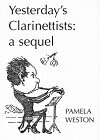
C067: Yesterday's Clarinettists: a sequel by Pamela Weston. Emerson Edition, 2002. PB, 314 pages. This book is a sequel to More Clarinet Virtuosi of the Past and follows the same format of entries of a single paragraph to several pages. There are about a thousand, of which about 600 are new, and the rest contain additional or corrected information. Many clarinetists of recent memory are included such as Daniel Bonade, Yona Ettlinger, Rudolf Jettel, Reginald Kell, Gustave Langenus, Robert Marcellus, Robert McGinnis, and Aage Oxenvad. Also included are a list of orchestras and their clarinetists (not especially up to date) and compositions with their first performance. |
39.95
|
|
C1439: The Development of the Altissimo Register for Clarinet by Norman M. Heim. Kendor Music, 1976, SS, 28 pages. This book is intended for use with students to improve their ability to play in the altissimo register. It includes exercises for smaller and larger intervals and ten etudes for practice. Some fingerings are provided. |
10.95
|
|
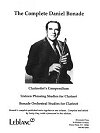
C919: The Complete Daniel Bonade compiled and edited by Larry Guy. Rivernote Press, 2007, SB, 142 pages. This combines three Bonade educational books that have not been available for several years. They are the Clarinetist's Compendium, Sixteen Phrasing Studies for Clarinet, and the Bonade Orchestral Studies for Clarinet. The editor has corrected typographical errors and notes, rhythms, dynamics, and slur markings in the Orchestral Studies. |
24.95
|
|
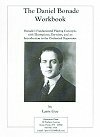
C338: The Daniel Bonade Workbook by Larry Guy. Rivernote Press, 2004, Third Edition 2007, SB, 110 pages. Daniel Bonade was arguably the greatest American clarinet teacher and certainly one of the greatest orchestral clarinetists of the 20th century. This workbook will reacquaint clarinetists with Bonade's fundamental playing concepts. It covers the tonal ideal, the study of legato, phrasing, articulation, coordination and control, conquering technical passages, Bonade's comments on orchestra excerpts, equipment (reeds and ligatures), Bonade's aesthetics, and studies based on Klose and Charpentier compiled by Bonade and Lefebve. |
24.95
|
|
C025: The Early Clarinet - A Practical Guide by Colin Lawson. Cambridge University Press, 2000, PB, 128 pages. This practical guide is intended for all clarinetists with a desire to investigate music of earlier periods. It contains help on both the acquisition and the playing of historical clarinets with much advice on style, approach, and technique which combine to make up a well grounded interpretation. "Early" in the context of this book is not limited to the Baroque clarinet, but extends through the nineteenth century to include the music of Brahms. |
42.95
|
|
C023: The Educator's Guide to the Clarinet - Second Edition by Thomas Ridenour. PB, 232 pages. The second edition of Tom Ridenour's best selling book has been expanded and improved. This book intended for anyone and everyone who is faced with the task of teaching or learning the clarinet. Part I: Clarinet Pedagogy consists of Teaching the Clarinet Tone Concept, The Air: Breathing and Blowing Correctly, The Tongue: Voicing the Clarinet Tone, How to Teach the Clarinet Embouchure, Summary Outline of Tone Production Techniques, How to Teach Articulation, and Technique: Fingering Fundamentals. Part II: Clarinet Equipment includes: How to Test and Select Clarinets, All About Clarinet Mouthpieces, Fundamentals of Reed Balancing, Clarinet Repair and Maintenance, and Accessories for the Clarinet. |
52.95
|

|
C899: The Effortless Clarinet by Richard Nunemaker. Richard Nunemaker, 2006, SS, 27 pages. This booklet by Richard Nunemaker, clarinetist, bass clarinetists, and saxophonist with the Houston Symphony since 1967, represents a distillation of the principles he has learned in his 40+ years as a professional. It covers: How to Hold the Clarinet, Breathing, Embouchure, Long Tones, Overtone Exercises, Mouthpiece Excises, Scales and Chords, Reeds, Tonguing/Staccato, Intonation, Sight-Reading, How to Practice, and Preparing for a Lesson, Audition or Performance. (Except other items with free shipping.) |
14.95
|
|
C047: Embouchure Building for Clarinetists by Larry Guy. Rivernote Press, 10th Edition, 2011, SB, 102 pages. This handbook was originally designed for teachers and intermediate-level clarinetists. In the most recent editions the author has added information of a more advanced nature. Chapters include The Function of the Embouchure, the External Embouchure, Building the Muscles of the Lips, Building the Air Support Mechanism, An Introduction to Vowel Concepts, for Tonal Purity, A Vowel Concept for the Lips, The Internal Embouchure--Tongue Position Development, How a Good Embouchure Affects Articulation, Developing the Upper Lip, and Fundamental Concepts Set Forth in this Handbook. Includes many diagrams, photos, and musical exercises. |
24.95
|
|
C1079: The Everyday Virtuoso by Robert Chesebro and Tod Kerstetter. Woodwindiana, 2008, SB, 118 pages. Subtitled: A Structured Approach to Developing Technique for Collegiate and Advanced High School Clarinetists. Tod Kerstetter (clarinet professor at Kansas State University) has written this book with his former clarinet professor from Furman University, Dr. Robert Chesebro. It describes the proven practice methods that Dr. Chesebro has used for years to develop incredible clarinetists in the state of South Carolina. Basically, Dr. Chesebro believes that all clarinetists with a good work ethic (and the willingness to spend some serious time with the metronome!) can develop outstanding technique—regardless of their social, economic, or musical background. Subjects include basic practice concepts, establishing a daily routine of sales and arpeggios, polishing techniques, managing practice sessions, developing articulation, and more. |
34.95
|
|
G054: For the End of Time, The Story of the Messiaen Quartet by Rebecca Rischin. Cornell University Press, 2003 (2006), PB, 175 pages. The author, clarinet professor at Ohio University, has written a comprehensive history of the composition and premiere of the Quartet for the End of Time (Quatour pour la fin du Temps) which took place in German camp for French prisoners of war in January, 1941. Based on extensive interviews and documentary research, it examines the events that lead to the composition, the experiences of the musicians in the camp, the composer's interpretive preferences, and the musicians' problems in execution and how they affected the premiere and subsequent performances. The paperback edition includes a new Appendix C with additional information. |
25.95
|
|
C1394: From the Clarinet d'Amour to the Contra Bass by Albert R. Rice. Oxford University Press, 2009, HB. 485 pages. Following his much acclaimed The Baroque Clarinet and The Clarinet in the Classical Period, Albert R. Rice now turns his signature detailed attention to large clarinets - the clarinet d'amour, the basset horn, the alto clarinet, bass and contra bass clarinets. Each chapter is devoted to a specific instrument (or instruments) or its music, and offers a fascinating insider's look at its defining characteristics, a comprehensive history of its evolution, meticulously researched information on its makers and aspects of construction, and a thorough discussion of its music. Rice illustrates how the introduction of large clarinets into chamber ensembles, wind bands, and opera orchestras was the result of experiments meant to address specific musical needs. Along the way, he brings to life the musicians, virtuosi, soloists, and orchestral and band musicians, as well as the instruments' makers and the composers from J. C. Bach to Smetana who wrote for them. Based on careful study of primary sources - musical compositions, patents, memoirs and diaries, and unfettered access to historical instruments themselves. There are references throughout the book to color illustrations that are available here on the web. |
144.95
|
 |
C844: Hand and Finger Development for Clarinetists by Larry Guy. Larry Guy, 2007, SB, 96 pages. The purpose of this book is to help clarinetists improve their finger speed and accuracy through the use of proper hand position, efficient finger motions, and correct fingerings. The book includes preliminary exercises, hand and finger fundamentals (in theory and practice), additional technical concepts, fingering guidelines, support of the air, the role of the embouchure, slow legato, note pattern comprehension, and mastering fast passages. The book has many illustrations and musical examples and exercises. |
24.95
|
|
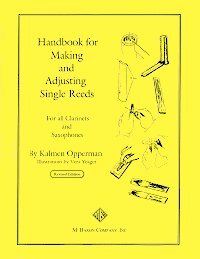
C066: Handbook for Making and Adjusting Single Reeds-Revised Edition by Kalmen Opperman, M. Baron Company, Inc., SS, 44 pages. This book is back in print after an absence of many years. It is intended for those who wish to make reeds or work on commercial reeds for all clarinets and saxophones. Subjects covered are the handmade reed, the commercial reed, cane, the model reed, tools, making the shaped blank from tube cane, cutting the vamp, finishing the reed, adjusting and retouching handmade or commercial reeds and the life of the reed. Appendices include reed scraping suggestions, suggested measurements, the German B-flat clarinet reed, and sources for cane and reed making equipment. |
20.95
|
|
C1238: Heroes & Heroines of Clarinettistry by Pamela Weston. Trafford Publishing, 2008, PB, 187 pages. This book contains a representative selection of articles written over a 40-year period by Pamela Weston. Fascinating information is revealed on best-known composer/clarinetist relationships such as Mozart with Anton Stadler, Weber with Heinrich Baermann, Spohr with Simon Hermstedt and Brahms with Richard Mühlfeld. Further subjects include the clarinetists of the French Revolution, Russia's clarinet dynasty, early 19th-century female performers, the great Finnish clarinetist Crussell whose diary tells of French Revolution events and a Napoleonic military parade, Verdi's clarinetist Cavallini who played for and was on familiar terms with the Tsar, the full stories of Stanford's concerto and Ireland's Fantasy-Sonata, and much more. |
29.05
|

|
CD201: The History of the Clarinet in Words and Music by Colin Lawson. Clarinet Classics, 1994, 81 pages, 2 CDs. The History of the Clarinet is an extended booklet and two CDs of music, tracing the development of the clarinet from the Baroque period to its current prominent position in all forms of music. The first CD is contemporary performances (some on period instruments) tracing clarinet music from the chalumeaux to the present. The second CD is historical recordings from 1898 to about 1940. The 81 page booklet is now a .pdf file on the second CD. Click on the cover image to view the contents of the two CDs. Use your browser's Back button to return. |
17.95
|
|
C029: Intonation Training for Clarinetists by Larry Guy. Rivernote Press, SB, 60 pages. Subjects include the general intonation problems of the clarinet and helpful fingerings, using a tuner, embouchure flexibility and the use of air, reeds and equipment. Also covered are pitch problems specific to the A, Eb and bass clarinet and some useful fingering for these instruments. The book includes many music examples, fingering diagrams, and other illustrations. |
14.95
|

|
C076: A Life in the Golden Age of Jazz, A Biography of Buddy DeFranco by Fabrice Zammarchi and Sylvie Mas. Parkside Publications, 2002, HB, 383 pages. A large, lavishly illustrated book on the life of Buddy DeFranco. Born in 1923, Buddy has lived through almost the entire history of jazz. He began a career "on the road" at the age of only 16, playing in many of the big bands which became the hallmarks of the Swing Era: Gene Krupa, Charlie Bamet, Tommy Dorsey and Boyd Raebum. He participated in the origins of the Bebop Revolution in New York in the 1940s, playing with Charlie Parker, Lennie Tristano, Dizzy Gillespie and all the greats. He also was featured with the legendary Count Basie Septet in 1950 and then led his own big band in 1951. From 1952 to 1956, Buddy led his own Quartet and then he lead the Glenn Miller Orchestra from 1966 to 1974. Subsequently he resumed his career as a soloist and leader of small ensembles and is still performing today. This book includes six transcribed solos, a complete discography and additional end notes. Because of the weight of this book, Media Mail (bookrate) shipping charges will be based on the actual cost of postage. |
64.95
|
|
C129: A Life in the Golden Age of Jazz, A Biography of Buddy DeFranco Collector's Edition by Fabrice Zammarchi and Sylvie Mas. Parkside Publications, 2002, HB, 383 pages. The Collector's Edition is personally autographed by Buddy and the authors and is luxuriously bound in bonded leather and comes in a slipcase. Only 1,000 copies of the Collector's Edition have been printed. Copies are individually numbered. Because of the weight of this book, Media Mail (bookrate) shipping charges will be based on the actual cost of postage. |
124.95
|
|
C064: Making Clarinet Reeds by Hand by Walter Grabner. ClarinetXpress, 1999, SB, 28 pages. This book is a comprehensive guide to making reeds "from scratch." Subjects include: why learn to make clarinet reeds, reed cane, tube cane vs. blanks, blanks suitable for clarinet reed making, quality of the cane, tools required for reedmaking, response vs. resistance, curing your blanks, measuring the length of the vamp, scoring the blank, removing the bark , the cuts, a model reed, filing, sanding, clipping and adjusting. The book includes nine photos. |
19.95
|
 |
G053: Messiaen - Quatour pour la fin du Temps by Anthony Pople. Cambridge University Press, 1998, PB, 115 pages. This book is a comprehensive guide to the Quartet for the End of Time by Olivier Messiaen (1908-92). It covers the origin of the work in a prisoner-of-war camp in 1940-41 and has an in depth assessment of each of its eight movements. |
32.95
|

|
C030: Mozart: Clarinet Concerto (Cambridge Music Handbooks) by Colin Lawson. Cambridge University Press, PB, 111 pages. There are a number of special problems surrounding the Mozart clarinet concerto since the autograph has been lost and the unique instrument for which it was written has not survived. This text presents a wealth of background information, an analysis of the concerto, and as well as details of surviving relevant instruments. |
36.95
|
| C031: Mozart: Clarinet Concerto (Cambridge Music Handbooks) by Colin Lawson. Cambridge University Press, HB, 111 pages. (List price is now $65.00.) |
44.95
|
|
|
C035: Multiphonics and Other Contemporary Clarinet Techniques by Gerald Farmer. SHALL-u-mo Publications, SB, 160 pages. A primary resouce for extended techniques. Includes performing multiphonics; fingering, trill and tremolo charts, and other techniques including harmonics, flutter tonguing, etc., plus an extensive bibliography. |
34.95
|

|
C034: New Directions for Clarinet by Phillip Rehfeldt. Scarecrow Press, PB, 200 pages. This is the 1992 second edition reissued by a different publisher in 2003. The second edition was completely rewritten, corrected where necessary, and updated. This is one of the most important books available on extended clarient techniques. Rehfeldt has added the complete list of William O. Smith's clarinet compositions and recordings to his previous listing of Smith's early multiphonic fingerings. The new edition also includes an appendix containing Eric Mandat's quarter-tone fingerings; a second music bibliography, the "International Update"; and an updated bibliography of music literature. |
52.95
|
|
C391: The New Extended Working Range for Clarinet by Kalmen Opperman. Carl Fischer, 2004, SS, 40 pages. While we are not quite sure what is new about the contents of this book, it does feature the largest clarinet fingering graphics we have ever seen. It covers the entire range of the instrument up to the G above altissimo G. It also has recommend chromatic scale fingerings. There are no remarks or annotations on the fingerings. |
12.95
|
|
C2489: Notes for Clarinetists by Albert R. Rice. Oxford University Press, 2017, PB, 296 pages. Subtitled: A Guide to the Repertoire, this book provides detailed information on 35 important pieces for the clarinet. It gathers information needed to prepare lectures and written material in a single, convenient resource and includes valuable insights into the construction of the piece, tonalities, themes, and cells. Of course, this material is also valuable to performers.The works included are: Arthur Benjamin Le tombeau de Ravel: Valse-Caprices for Clarinet and Piano; Alban Berg Four Pieces for Clarinet and Piano Op. 5; Luciano Berio Sequenza IXa for Clarinet Solo; Leonard Bernstein Sonata for Clarinet and Piano; Pierre Boulez Domaines for Clarinet Alone; Johannes Brahms Sonata for Clarinet and Piano Op. 120 No. 1; Aaron Copland Concerto for Clarinet, String Orchestra, Harp, and Piano; Bernhard Henrik Crusell Concerto for Clarinet and Orchestra Op. 5; Claude Debussy Première Rhapsodie for Clarinet and Piano; Gerald Finzi Five Bagatelles for Clarinet and Piano Op. 23; Jean Françaix Concerto for Clarinet and Orchestra; Paul Hindemith Sonata for Clarinet and Piano; Franz Krommer Concerto for Clarinet and Orchestra Op. 36; Jean-Xavier Lefèvre Sonata for Clarinet and Bass Op. 12 No. 1; Witold Lutoslawski Dance Preludes for Clarinet and Piano; Donald Martino A Set for Clarinet Unaccompanied; Bohuslav Martinu Sonatina for Clarinet and Piano; Darius Milhuad Sonatina for Clarinet and Piano Op. 100; Wolfgang Amadeus Mozart Concerto for Clarinet Orchestra K. 622; Robert Muczynski Time Pieces for Clarinet and Piano op. 43; Carl Nielsen Concerto for Clarinet and Orchestra Op. 57; Krzystof Penderecki Three Miniatures for Clarinet and Piano.; Francis Poulenc Sonata for Clarinet and Piano; Max Reger, Sonata for Clarinet and Piano Op. 107; Gioachino Rossini Introduction, Theme, and Variations for Clarinet and Orchestra; Archduke Rudolph of Austria Sonata for Clarinet and Piano Op. 2; Camille Saint-Saëns Sonata for Clarinet and Piano Op. 162; Robert Schumann Fantasy Pieces for Clarinet and Piano Op. 73; William O. Smith Variants for Solo Clarinet; Louis Spohr Concerto for Clarinet and Orchestra Op. 26; Johann Stamitz Concerto for Clarinet and Orchestra; Karlheinz Stockhausen Der Kleine Harlekin für Klarinette, Werk nr. 42½; Igor Stravinsky Three Pieces for Clarinet Solo; Antoni Szalowski Sonatina for Clarinet and Piano; and Carl Maria von Weber Grand Duo Concertant for Clarinet and Piano Op. 48. We carry all of these except William O. Smith Variants for Solo Clarinet which we are looking into and the Stockhausen which should be available directly from the publishing business established by the composer. |
37.95
|
|
C038: Perfect A Reed . . . and Beyond by Ben Armato. Reed Wizard, SS, 43 pages. While the author has designed and sells several mechanical devices for measuring and working on reeds, this is a comprehensive book on reeds with only a brief mention of his products. A few of the many topics covered are: reed myths, arundo donax vicissitudes, reed adjustment, reed nomenclature, reed preparation, reed warpage, etc. |
19.95
|
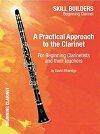 |
C1247: A Practical Approach to the Clarinet For Beginning Clarinetists and their Teachers by David Etheridge. Woodwind Educators Press, 2008, SS, 38 pages. This book for beginners includes lots of helpful diagrams, photos, and musical exercises. The topics covered include assembling the clarinet, getting a great tone from the beginning, fingerings for all notes from low E to C above the staff, articulation, notes for the little fingers, control of the register change, playing beautiful high notes and daily drills. |
10.95
|
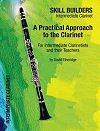 |
C1248: A Practical Approach to the Clarinet For Intermediate Clarinetists and their Teachers by David Etheridge. Woodwind Educators Press, 2008, SS, 48 pages. The intermediate book continues this series with more detailed looks at some subjects touched on in the beginning book. The topics covered include breathing and posture, breath control and support, embouchure, voicing the tone, articulation, left hand position and the register change, right hand position and alternate fingerings, and altissimo notes to high G. Many diagrams, photos and musical exercises are included. |
10.95
|
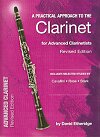 |
C1249: A Practical Approach to the Clarinet For Advanced Clarinetists, Revised Edition by David Etheridge. Woodwind Educators Press, 2009, SB, 148 pages. The purpose of this advanced book is to provide a number of ways to approach each of the fundamental aspects of clarinet playing and to provide the tools to learn music of all levels of difficulty. The first four skills: breathing & posture, breath control & support, embouchure, and voicing create a beautiful clarinet tone. Other topics covered are: articulation, hand position, subdivision, throat tones, high notes, upward and downward skips, legato finger motion, and rinforzando attacks. This book adds and extensive array of etudes (mostly from Rose) for practicing the techniques. A short bibliography of suggested material is also included. This is the revised edition of this book. It is 66 pages longer than the original version. |
39.95
|
 |
C040: Preliminary Exercises & Etudes in Contemporary Techniques for Clarinet by Ronald L. Caravan. Ethos Publications, SS, 44 pages. Dr. Caravan has been a member of the faculty of Syracuse University School of Music since 1980 teaching applied clarinet and saxophone. His Eastman School of Music doctoral dissertation was Extensions of Technique for Clarinet and Saxophone (1974). This book provides a solid introduction to extended clarinet techniques for the advanced student and can be used as material for lessons or self study. This book covers the areas of Timbre Variation, Quarter Tones, and Multiphonics. Each section includes an explanation of the technique, examples, fingering charts (when appropriate), and etudes. |
17.50
|
|
C1039: Protocol: A Guide to the Collegiate Audition Process for Clarinet compiled and edited by Larry Clark and Daniel Schmidt with a Forward by Robert S. Spring. Carl Fischer, 2007, SS, 45 pages (plus piano accompaniment 27 pages). The purpose of this book is to provide high school students with or without a private teacher with a comprehensive collection of materials that will satisfy the needs of most college music auditions. It includes information on how to take an audition, music placement exams, selecting a college, and repertoire of the most often requested material. This includes scales and arpeggios from Carl Baermann Op. 63, Orchestral Excerpts (Beethoven Symphony No. 6 and Mendelssohn-Bartholdy A Midsummer Night's Dream Op. 61 Scherzo), Technical Etudes (No. 6 and No. 11 from the Rose 32 Etudes) and two complete pieces with piano accompaniment (Weber Concertino Op. 26 and Debussy Premiere Rhapsody). |
19.95
|
 |
C657: Repertory of the Clarinet, A Listing of Works for Study and Performance by Kalmen Opperman. Carl Fischer, 2006, PB, 137 pages. This is a reprint of the original 1960 hardbound edition. It includes listings of music including or featuring clarinet in nearly every conceivable combination. Listings include composer, title and publisher and in some cases additional information such as instrumentation, date, and (rarely) duration. While some of the music listed is out of print, this is still a useful reference book. |
14.95
|
|
WW026: Saxophone Mouthpiece Selection by Robert Scarff. Jamey Aebersold Jazz, 2006, SB, 88 pages. This book contains information on mouthpiece parts and design, guidelines in selecting a mouthpiece for the type of sound you need, facing charts for commercial saxophone and clarinet mouthpieces, and chamber designations of some representative brands of saxophone mouthpieces. This book also includes guidance on reed adjustments, some maintenance tips, and some musician jokes. While this book is primarily oriented toward the saxophonist, clarinetists will also find useful information here. |
9.95
|
|
C041: Selection, Adjustment, and Care of Single Reeds by Larry Guy. Rico Editions by D'Addario, 2012 (third edition), SB, 64 pages. A practical and well illustrated guide to clarinet and saxophone reeds. This book presents detailed instructions for selecting, breaking in, and adjusting reeds in an easily understood manner. It also includes a guide to the selection, care and use of reed tools (knives, sharpening stones, sandpaper, files, etc.). |
24.95
|
|
C2342: Spectral Immersions, A Comprehensive Guide to the Theory and Practice of Bass Clarinet Multiphonics by Sarah Watts. Metropolis, 2015(?), PB, 248 pages + 2 CDs. Sarah has recently completed a PhD in bass clarinet multiphonics. She has created new multiphonics charts for the bass clarinet and commissioned new works for bass clarinet that use her results. The book contains history, analysis, new charts and new compositions together with audio and data CDs. |
55.95
|
|
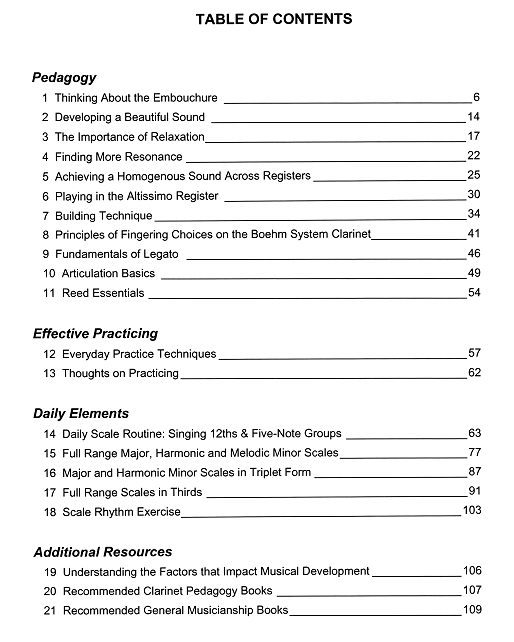
C2323: Squeak Big, Practical Fundamentals for the Successful Clarinetist by Phillip O. Paglialonga. Imagine Music, 2015, SB, 109 pages. Squeak Big teaches aspiring clarinetists the fundamentals necessary for success on the instrument through conceptual development and practical exercises. The book is divided into four sections: Pedagogy (embouchure, sound, relaxation, homogeneous sound. altissimo, building technique, finger, legato, articulation and reeds), Effective Practicing, Daily Elements (scales), and Additional Resources. Click on the cover image to view the full Table of Contents. |
31.95
|
|
C065: Swing, Swing, Swing - The Life & Times of Benny Goodman by Ross Firestone. Norton, PB, 522 pages. An extended biography of Benny Goodman, from his childhood in the Maxwell Street ghetto in Chicago through his long and successful career. A valuable account of the life of a key figure during the period when jazz was America's popular music but who was also a complicated and difficult man. |
34.95
|

|
 C1738: Dave Tarras, The King of Klezmer by Yale Strom. Or-Tav Music Publications, 2010, PB, 128 pages. A long overdue biography of a musical giant, klezmer clarinetist Dave Tarras (1897-1989). Through comprehensive interviews, detailed historical perspective and a musician's insider knowledge, Yale Strom has woven a fascinating and informative portrait of one of the 20th Century's most important, influential, and charismatic klezmers. About half the pages of this book are 28 compositions by Tarras with parts in C and B-flat with chord symbols. C1738: Dave Tarras, The King of Klezmer by Yale Strom. Or-Tav Music Publications, 2010, PB, 128 pages. A long overdue biography of a musical giant, klezmer clarinetist Dave Tarras (1897-1989). Through comprehensive interviews, detailed historical perspective and a musician's insider knowledge, Yale Strom has woven a fascinating and informative portrait of one of the 20th Century's most important, influential, and charismatic klezmers. About half the pages of this book are 28 compositions by Tarras with parts in C and B-flat with chord symbols. |
26.95
|
|
C074: Tipbook Clarinet by Hugo Pinksterboer. The Tipbook Company, 2001/2010, PB, 240 pages. A newer edition of this book in a larger format and with almost 100 additional pages. This is a "hardware" book about the instrument itself and is especially recommended for anyone who wants to learn more about or needs a reference on the physical aspects of the clarinet. This may include adult beginners, parents of clarinet students, teenage students, non-clarinetist music education majors or band directors, etc. The book is very well illustrated and includes chapters on buying a clarinet; mouthpieces, ligatures, and barrels; reeds, how clarinets are made, the brands of clarinets, steps to take before and after playing, maintenance, the family of clarinets and related woodwinds, etc. The new edition of this book includes a fingering chart. Interactive Tipcodes, audible examples of topics in the book, can be accessed at www.tipbook.com. |
14.95
|
|
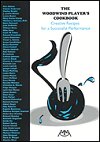
WW179: The Woodwind Player's Cookbook edited by Charles West. Meredith Music, 2008, PB, 178 pages. Subtitled Creative Recipes for a Successful Performance, this valuable collection of quick-to-read yet deeply insightful strategies is like finding expert trade secrets all placed in one convenient source. With outstanding records of performance, workshop clinics, recordings, research, composition, leadership and teaching, the 57 authors provide their favorite “recipes” that range from overviews of successful programs to specific topics that will inspire all levels and types of ensembles and performers. Sample “recipes” include: Developing Facility on the Bass Clarinet (J. Lawrie Bloom), Breathing Demystified (Leone Buyse), Recipe for Preventing Play-Related Health Problems (William J. Dawson, M.D.), How Should I Test a Saxophone Mouthpiece? (Eugene Rousseau), and many more. Click on the cover image to view the Table of Contents of this book. |
24.95
|
|
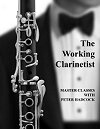
C043: The Working Clarinetist by Peter Hadcock edited by Bruce Ronkin, Aline Benoit and Marshall Burlingame. Roncorp Publications, 1999. SB, 212 pages. Subtitled Master Classes with Peter Hadcock. Hadcock, the late Assistant Principal and E-flat Clarinetist of the Boston Symphony Orchestra, describes this book as an attempt to put on paper what he learned during his forty-three years of playing the clarinet. The book is divided into four parts. The first part which represents three quarters of the book is annotated orchestral excerpts many of which are part of the standard audition repertoire. Part 2 covers many technical aspects of clarinet playing such as embouchure, articulation, intonation etc. Part 3 are master classes on Mozart's and Nielsen's clarinet concertos. The final section has trill and tremolo fingerings. Click on the cover image to view the list of excerpts. |
45.95
|
 |
Video DVD009: Working the Single Reed by David Bourque. BCL Enterprises, 2005, DVD. This DVD by David Bourque, a member of the Toronto Symphony for more than 20 years, is a "how to" video for adjusting commercial reeds. It will help you: fix unresponsive reeds, make more reeds play well, learn how to scrape a reed, learn where to scrape a reed. have more reed stability, no more waterlogged reeds, and adjust the Légère reed. |
29.95
|
Bindings: HB: Hard Bound, PB: Perfect Bound (paperback with square spine), SS: Saddle Stitch (paper, folded and stapled), SB: Spiral Bound (plastic or metal)